Author: society_admin
Fidelity Partners ImpactHER to Empower 1,052 Female Entrepreneurs with Sales Skills
The training, which commenced in January 2022, has had two cohorts that lasted for four weeks each, covering a myriad of topics such as Digital marketing, building your brand and selling online, etc. The participants were also assisted in putting their businesses on Google Maps, thus allowing customers and the global market to easily find and transact business with them.
Commenting on the partnership, Osita Ede, Divisional Head, Product Development at Fidelity Bank Plc said, “It has become imperative that female entrepreneurs in Africa are empowered to overcome the lack of digital literacy which impedes them from fully reaping the benefits of the digital transformation underway across Africa, and the world. We believe providing them this access will help them to thrive in their different businesses.”
According to Efe Ukala, Founder of ImpactHER, “Statistically, women and girls are 25 per cent less likely to leverage digital technology for basic purposes, 4 times less likely to know how to programme computers and 13 times less likely to file for technology patents. This therefore highlights the importance of equipping African women with digital skills that could be leveraged to scale their businesses. Let’s not forget that data shows that Africa can add 180 billion Dollars to its GDP by 2025 if we close the e-commerce digital gap.”
This intervention is critical as the Global Entrepreneurship Monitor for 2019/2020 highlighted that millions of women worldwide have started businesses over the last five years alone: the highest percentage of these women live in Africa, with approximately 26% of female adults engaged in entrepreneurial activity yet the World Bank confirms through data collected in ten African countries that on average, male-owned companies have six times more capital than female owned enterprises, resulting in monthly profits of female-owned enterprises that are, on average, 38% lower than male-owned businesses.
Fidelity Bank is a full-fledged commercial bank operating in Nigeria with over 6.5 million customers serviced across its 250 business offices and digital banking channels. The bank was recently recognized as the Best SME Bank Nigeria 2022 by the Global Banking & Finance Awards. The bank has also won awards for the “Fastest Growing Bank” and “MSME & Entrepreneurship Financing Bank of the Year” at the 2021 BusinessDay Banks and Other Financial Institutions (BAFI) Awards.
The bank boasts of a robust bouquet of products designed to help female-led small businesses run successfully including digital loans and HerFidelity -a proposition comprising exciting features such as capacity development initiatives, access to finance, recognition and networking events, health and wellness programmes, etc, all designed to speak to the yearnings of women.
Clementina Uzogor, the Programs Director at ImpactHER, highlighted the importance of helping women with skills like this to take their businesses to the next level. “At ImpactHER, it is our mission to ensure that we equip these women with tools for their businesses to thrive”, she explained.
She also appreciated Fidelity Bank for working with them to ensure the programme was successful and impactful. “It is important to let you know that this is not the end of this training. We will be deepening our partnership with Fidelity to train and support 5,000 more women-led small and medium sized businesses in the country before the year runs out”, she divulged.
An excited participant from the second cohort, Ms Akinyemi Oluronke, a fashion designer from Lagos underscored the benefits of joining the training for her business, “I’ve been able to build an online presence, people now know my business exists and I get a lot of calls from people who found my business online. I am very grateful for this platform and the overall increase in sales I now enjoy.”
According to Carine Nneka Achokwu, another participant from the January 2022 cohort and CEO of Carine Bakery, a company that produces pastries and cakes in Lagos, Nigeria, “I have been able to increase sales by 40% after using the tools that was provided to me such as “Google My Business” and people have been calling to order from me and I’ve also been able to reach more customers. I am thankful that I can get people to patronize my business just by tapping my phone based on the knowledge I acquired at this training.”
ImpactHER is an impact-driven nonprofit organization that empowers African female entrepreneurs by bridging the gender business financing gap so as to assist them in realizing their full economic potential. ImpactHER has since its inception trained, directly supported with investor-readiness and business scalability skills & tools to over 44, 275 women across 53 countries in Africa.
This partnership also provides follow-up training and support for the participants and is one of the ways ImpactHER and Fidelity Bank help these women scale up their offerings.
Sterling Bank, NHEA recognize Nigeria’s Healthcare Champions
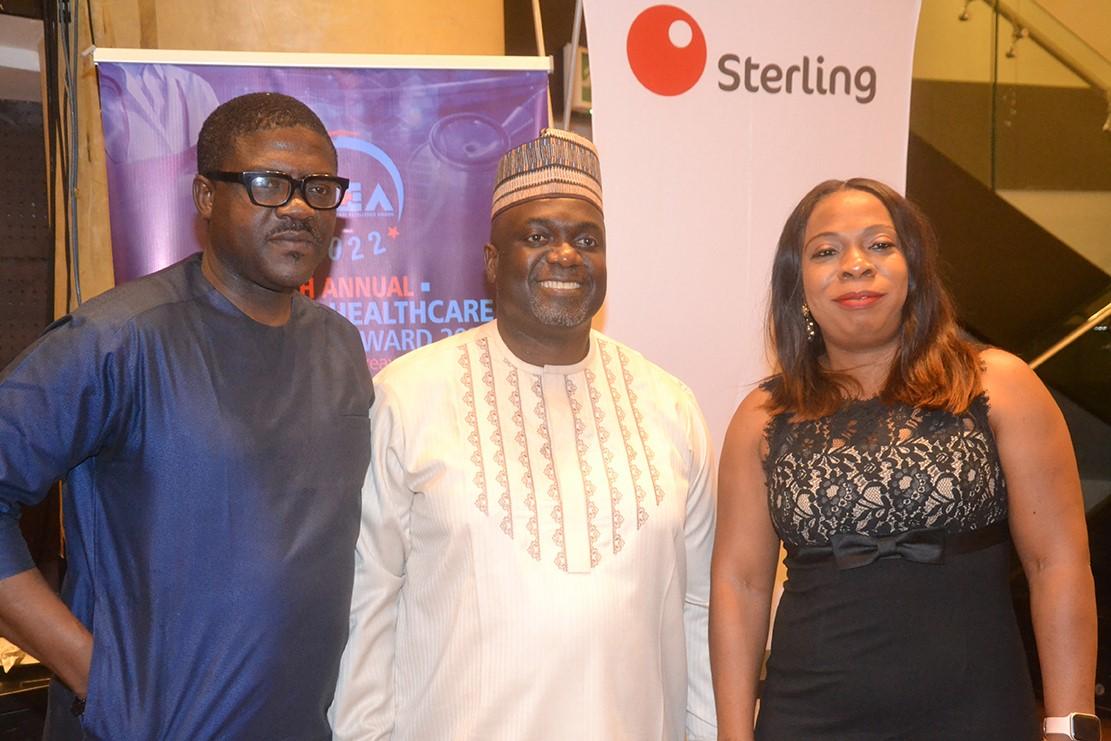
Sterling Bank Plc, Nigeria’s leading commercial bank, has given special recognition awards to healthcare providers who played leading roles in the fight against the COVID-19 pandemic.
Sekibo, Obi, others harp on security, leadership for economic prosperity
The MD/CEO of Heritage Bank Plc, Ifie Sekibo and other notable Nigerians have affirmed that the apt way to boost economic prosperity and peace in the country is to start addressing leadership challenges and insecurity.
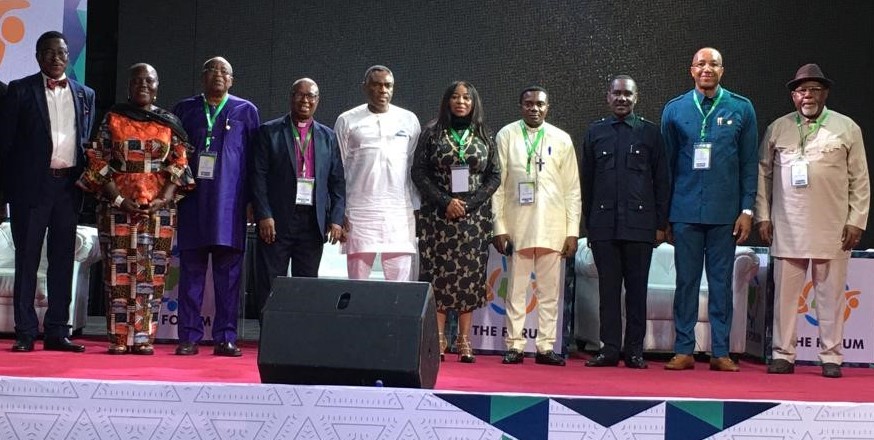
Sekibo and other notable Nigerians like the Presidential aspirant of Labour Party, Peter Obi, Pastor Ituah Ighodalo, Prof. Oyelowo Oyewo, Dr. Victoria Ekhomu and Barrister Sotonye Inyeinengi-Etomi, during the 2nd Edition 2022 Forum, one-day International
Colloquium organized by The Men’s League of Christ Church Port Harcourt, tagged, “What do Nigerians Want?”, extensively brainstormed on the kind of leadership the country needs and how to rescue the country from its current debacle.
Speaking on the topic, “The Economy Nigeria Needs to Break Forth,” Sekibo stressed that of important to achieving the transformation the country needs, there was urgent need to address insecurity, which according to him, is the foundation of prosperity, as no nation can achieve much where the is no peace.
Sekibo, represented by the Divisional Head, Strategy & Business Solutions, Segun Akanji emphasized that for security purposes, there must be an established functional and value adding identity system in place.
“On a higher note, I think one of the things that we need to achieve as a country is the issue of functional and value adding identity management, which is still far away from us, although, some people know that we have BVN, NIMC and a few other identity capture systems but they have not been as functional and value adding, like the social security number that most people in advanced economies carry,” he stated.
Sekibo further explained that to achieve a prosperous economy, Nigeria needs to find ways and means by policies to build dual circulation economy which thrives on three pillars.
According to him, we need to focus on building dual circulation economy where we can expand domestic production and demand by making sure that the masses are employed.
“We need to make our people are productive and stop putting subsidy in unproductive zones. When you give subsidy to people with inadequate or no income, they really cannot add value to the economy, and money has a way of flowing away due to import of consumables from other countries and because of this, a larger portion of every consumption or cash given as subsidy gets out of the country,” said Sekibo.
The bank’s helmsman further explained that to expand the domestic production, government must give the private sector support to drive employment creation, technology, which is riding on innovation and manufacturing must be in place and, the population which is an added advantage must be well educated.
He highlighted the need to examine how the country could add value to primary production for global export, emphasizing on reduction of over dependence on foreign markets but rather increase local production for export, whilst also increasing demand on local products.
Sekibo further affirmed that if states could function as proper federating units and take the lead of the competitive comparative advantages therein, wealth creation would be achieved that would bring about the desired changes.
The former governor of Anambra state and presidential aspirant, Peter Obi lamented the huge indebtedness of the country, which he blamed on unproductivity due to the inimical situation of high unemployment rate resulting to over 80million Nigerians being jobless.
He blamed the cumulative failure of government over the years on insecurity, failure to migrate from sharing formula to production formula and lack of will to transform the power sector and the need to focus and support the micro, small and medium enterprises (MSMEs).
In his paper titled, “The President Nigeria Needs”, Pastor Ighodalo harped on the need for leadership change.
He argued that what the country needs now are leaders who have vision and are ready to sacrifice for the common man, stating, “things must be done differently”.
Ighodalo believed leadership remains the bane of Nigeria’s transformation, stressing that once we get good leadership other things will fall in place.
Prof. Oyewo while speaking on the topic “Restructuring and True Federalism” was of the view that some responsibilities need to be decentralized like the police, power provision and railway.
Once there is decentralization, he believes that the state will have less dependence on the centre, “rebalancing of the constitution in terms of power and security. So, there is reason for state police.”
Oyewo maintained that regions are closer to the people, thus it will boost security, the economy and sense of belonging by the populace.
He also identified data and planning as key factors in ensuring that programmes are tailored towards the people.
Fitch Reaffirms Ecobank Nigeria’s Stable Outlook
According to the report, though “ENG has a moderate market share of Nigeria’s banking sector assets (3.9% at end of 2021), its franchise gets an edge and benefits from being a subsidiary of Ecobank Transnational Incorporated (ETI; B-/Stable), a large pan-African banking group with operations spanning 33 countries across Sub-Saharan Africa (SSA)”.
The report stated “rising global risks will weaken domestic operating conditions as any downside to operating conditions, “Inflation (17.7% in May 2022) is expected to remain stubbornly high, posing downside risks to real GDP growth forecasts of 3.1% and 3.3% in 2022 and 2023, respectively. However, downside risks are somewhat mitigated by strong oil prices, which should also underpin growth in non-oil sectors and banks’ asset quality”. It stated.
It reiterated that the Viability Rating of Ecobank Nigeria reflects its standalone creditworthiness despite the concentration of its operations within Nigeria’s challenging operating environment, high credit concentrations, asset-quality weaknesses, modest profitability, and weak capitalisation in the context of these risks. It also reflects a sizeable franchise and a healthy funding and liquidity profile.
“Ecobank Nigeria ENG has a Shareholder Support Rating (SSR) of ‘ccc+’. Fitch sees a high propensity in ETI to provide support given ENG’s importance to the parent’s pan-African strategy as its largest subsidiary (22% of group assets at end of 2021) and its presence in SSA’s largest economy. Fitch observed that rising global risks will weaken domestic operating conditions. Inflation (17.7% in May 2022) is expected to remain stubbornly high, posing downside risks to real GDP growth forecasts of 3.1% and 3.3% in 2022 and 2023, respectively. However, downside risks are somewhat mitigated by strong oil prices, which should also underpin growth in non-oil sectors and banks’ asset quality”. it stated.
Technology firms provide more opportunities for micro businesses in rural areas
There is need for more intervention of e-commerce platforms to reach the underserved, and to further boost the national gross domestic product (GDP) of which the informal retailers are critical. The informal retail segment makes up the micro, small and medium enterprises (MSMEs) bloc which serves as the engine of economic growth contributing 50 per cent to the GDP and 80 per cent of the country’s total employment.
B2B e-commerce platforms have significantly impacted the manufacturing, distribution and retail value chains by supporting them with tech-driven digital solutions including warehousing and logistics infrastructure, and fulfilment solutions. B2B e-commerce platforms like Alerzo have their presence in rural areas and are reaching the underserved with access to extensive catalogue of products and logistics. Through texts, phone calls and logging on to the site where applicable, customers now easily place orders and get the goods delivered swiftly without being charged for delivery. So, unlike the deprivation of past years which micro business owners in underserved areas faced, most of them today can boast of better and faster access to goods and commodities.
Gbajabiamila is pride to Lagos, face of effective legislature – Lagos Assembly
The members of the House spoke during plenary describing Gbajabiamila as one who has brought pride to Lagos State.
Speaking about Gbajabiamila’s legislative acumen, Rt. Hon. Obasa described the Speaker of the House of Representatives as “a legislator who carries out his duty with passion and dedication. He has sacrificed his own personal interest in the interest of the people.
“You will recall during the reign of the Peoples Democratic Party (PDP); he was awarded a national honour, but because he had reservations the way and manner the country was being managed then, he rejected the offer.
“This shows that he has always been with the people and serves in the interest of the people. He has also contributed a lot to the development of legislative institutions in this country.”
The Speaker thereafter directed the Clerk Barr. Olalekan Onafeko to transmit a congratulatory letter to the celebrant.
The Deputy Speaker, Hon. Wasiu Eshilokun-Sanni, in his congratulatory message described Rt. Hon. Gbajabiamila as an example of what a legislator should be .
“He has shown that the older the wine, the better the legislature,” he said.
Majority Leader of the House, Hon Sanai Agunbiade, described Gbajabiamila is a man that is charismatic of the office he occupies.
“He is calm, composed and each time you watch him preside, you would know an experienced legislator is presiding,” he said.
The Deputy Whip of the House, Hon. Mosunmola Sangodara, described Rt. Hon. Gbajabiamila as a great leader who has brought developmental projects to Surulere constituency.
“He is a very outstanding man. His success cannot be far-fetched as this trait can be seen in his mother who was once a Local Government chairperson and performed very well during her time,” she said.
In his contribution, Hon. Temitope Adewale from Ifako-Ijaye said Speaker Gbajabiamila had shown to the world that there is credence in legislature .
“We are celebrating a man from Lagos who has rose from the ranks to become the ‘number four citizen’ in the country,” he said.
While lending his voice to the debate, Hon. Sa’ad Olumo opined that “Gbajabiamila had done everything in terms of quality representation. He has great impact on us in his capacity and representation.”
Sunday Musings: My Position on Bola Ahmed Tinubu (BAT) – Prof Bolaji Aluko
Alerzo E-commerce platforms empowering retail businesses
This is following the data from the National Bureau of Statistics as well as the Small and Medium Enterprises Development Agency of Nigeria (SMEDAN), that Micro and Small Medium Enterprises (MSMEs) account for about 96 percent of registered Nigerian businesses that employs about 75% of the national labour force, and contributes about 48% to the country’s Gross Domestic Product (GDP), it is clear that the Micro and Small Medium Enterprises (MSMEs) form the bedrock of the economy.
With its cashless payment and lending platform – Alerzopay, Alerzo provides retailers, regardless of their economic situations, with working capital to keep their stores running and to drive financial inclusion to the excluded informal retailers.
With the advanced POS terminals that run on Alerzopay platform, retailers can act as agents: processing customer deposits and withdrawals to purchase goods or use as spending cash and process value added services such as utility bill payments, etc.
The integration of Alerzopay and the use of the POS machines in their customers’ businesses improves their overall profit margins, as retailers receive commissions for each transaction carried out on the platform.
AFRIMA MEETS ECCAS, UNESCO IN GABON, DISCUSSES PLANS TO STIMULATE AFRICA’S CREATIVE ECONOMY
As the All Africa Music Awards (AFRIMA) began its countdown to the 2022 main awards ceremony, Monday, with the call for submission of entries from artistes, the continental awards platform has restated its commitment to uplifting the African creative economy, using music as its tool.
It made this known during a recent strategic stakeholder meeting, in Libreville, Gabon, with the President of Economic Community of Central African States (ECCAS) Commission, Minister of Culture and Tourism, Gabon, delegates and senior officials from the United Nations Educational Scientific and Cultural Organisation (UNESCO), as well as delegates from Centre International des Civilisations Bantu (CICIBA) who are excited about the AFRIMA initiative.
AFRIMA, which is in partnership with the African Union Commission (AUC), corroborated UNESCO’s standpoint, on the need to deepen Africa’s creative exports, especially through providing access to training and resources for young aspiring creatives.
According to UNESCO’s representative to Gabon and ECCAS, Mr. Eric Voli Bi, Africa’s creative economy needs more support and opportunities for the youth – who make up the larger chunk of the workforce – to thrive.
He said, “I must thank AFRIMA for constantly projecting the continent in a positive light to the world, and for giving African youths opportunities to be recognised on a continental and even global scale. UNESCO is always interested in youth education and development initiatives, and AFRIMA is one veritable platform to help stimulate potentials among these youths. I believe, with one voice, we can speak louder. That is the way to go.”
The President of ECCAS Commission, His Excellency Gilberto Da Piedade Vérissimo, accompanied by Her Excellency Ms. Kapinga-Yvette Ngandu, Commissioner in charge of the Department of Gender Promotion and Human and Social Developments, ECCAS, welcomed the AFRIMA delegates to its regional secretariat and pledged support towards AFRIMA. He assured that ECCAS will partner AFRIMA to provide capacity building for African youths across the central African region as well as develop its music industry.
Vérissimo said, “Every year, we see our African artistes shine on global levels. It will be retrogressive for us, if we do not invest in them as well. ECCAS, in partnership with the European Union, will continue to invest resources into capacity building for African youths, especially within the entertainment sector. Apart from healthcare and education, the cultural and creative sector of the Central African region is within our primary focus. We are excited that platforms like AFRIMA thrive to give voice to our objectives, and we will pull our weight behind it, for the growth of the continent.”
On behalf of the awards platform, the President and Executive President, AFRIMA, Mr. Mike Dada, assured Africans that the AFRIMA, which has been running since 2014, will continue to prioritise inclusivity in its capacity-building initiatives.
“AFRIMA, and all its supporting initiatives, like the Africa Creative Academy, which we have in the pipeline, is for the entire continent. It is not an East African affair, or a West African Affair. We are one voice and one platform for the African people. So, our capacity-building efforts will cover the length and breadth of the continent and the diaspora. We equally apply this same character in all our campaigns, especially our submission of entries which is ongoing from now till August 5, 2022; it covers everyone across the continent and the diaspora.
“We have done this since 2014, and we are committed to consolidating our efforts this year, with even more zeal, initiatives and twists, to make AFRIMA the pride of not just the African individual, but also every black person and lover of African music out there.”
The main ceremony of the All Africa Music awards will be held from Thursday November 3 to Saturday November 6, 2022. It will feature a 4-day fiesta of music, glitz, and glamour, which commences with a welcome soiree, followed by the AFRIMA Music Village, the host city tour, African Music Business Summit, and the exclusive nominees’ party, before culminating with the live awards ceremony broadcast to over 84 countries around the world.
The submission of entries for the awards is also ongoing for artistes, artiste managers, record producers, recording companies, video directors, disc jockeys and other relevant stakeholders can submit their work or submit on behalf of their clients via the official afrima website at www.afrima.org. All entries must be done in consonance with AFRIMA guidelines, which are also available on the website. Importantly, all prospective entries must have been created between August 20, 2021 and August 5, 2022, being the year-in-review for all submissions.
African music lovers can follow through with the build-up events to the main awards, by engaging the social media platforms (Instagram – Afrima.official; Twitter – Afrimaofficial).