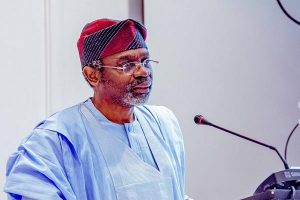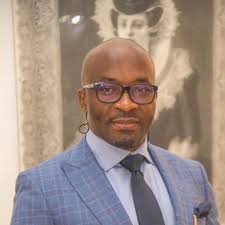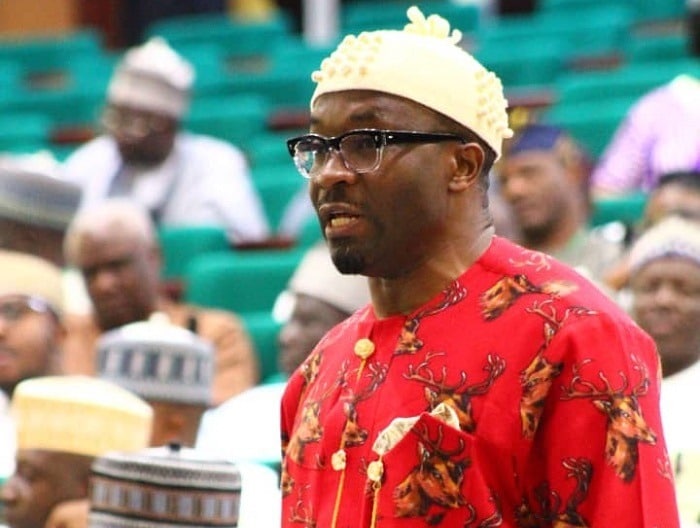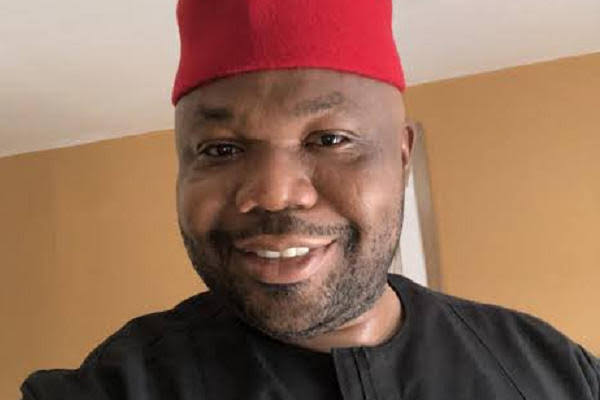
The people of Bichi Federal Constituency in Kano State can look upon the accomplishments of their representative, Rt. Hon. Abubakar Kabir Abubakar Bichi, with immense pride. His contributions to their constituency, the state, and Nigeria at large have been both remarkable and impactful.
Nicknamed “Shine your Eyes,” the humble legislator was born on October 2, 1981, in Hagagawa village, Bichi town, the administrative seat of Bichi Local Government and the Bichi Emirate Council. His vision and commitment to democratic principles have set him apart as one of the leading figures of his generation. A champion of transparency and accountability, Rt. Hon. Bichi has earned a reputation as a transformative leader and a symbol of national unity.
While many legislators focus solely on their legislative duties—law-making, oversight, and appropriation—Rt. Hon. Bichi goes beyond these roles. Through his political acumen, he has broken barriers and extended his reach, bringing development not only to his constituency but also to other parts of the country. His dedication to using his personal resources and influence to uplift lives is a testament to his commitment to public service.
One of his most notable achievements is the asphalting of major roads in his constituency, which has greatly improved transportation and boosted the movement of goods, services, and agricultural produce. This infrastructural development underscores the effectiveness of a truly dedicated leader.
In education, Rt. Hon. Bichi has ensured that nearly all public schools in his constituency have well-equipped, conducive classrooms, fostering a better learning environment for students. He believes in empowering the youth while also taking care of the elderly, acknowledging that the future of every community depends on its young people, guided by the wisdom of its elders. His efforts include providing healthcare and resources for the elderly, further highlighting his inclusive leadership approach.
A forward-thinking leader, Rt. Hon. Bichi is not only focused on addressing current needs but also on leaving a lasting legacy. Among his various initiatives, his focus on agriculture has been transformative. By providing timely agricultural inputs, he has positioned his constituency as an agricultural hub, promoting food security and economic development.
Napoleon Bonaparte once said, “Ability is of little account without opportunity.” Rt. Hon. Bichi embodies this belief by empowering the youth through programs that advance skills, foster entrepreneurship, and create job opportunities. His initiatives have helped constituents build businesses and secure employment in government agencies. These efforts have opened avenues for personal and professional growth, making Bichi Federal Constituency a model of progress.
One of his hallmark programs is the annual scholarship scheme, which provides free education to tertiary students in his constituency. Over 10,000 beneficiaries have received this life-changing support, enhancing their intellectual capacities and opening doors to a brighter future.
Thanks to his pragmatic leadership, Bichi Federal Constituency has become a benchmark for others. His emphasis on human capital development, job creation, and wealth redistribution has improved social services and youth empowerment, setting a standard for national development.
In recognition of his achievements, Rt. Hon. Bichi has held key leadership roles, including Chairman of the House Committee on Works, Chairman of the House Committee on Appropriation, and Chairman of the House Committee on Federal Character. His extensive knowledge of Nigeria and his ability to foster unity have enabled him to oversee several federal road projects, including the Lagos-Badagry Expressway, Abuja-Kaduna-Zaria-Kano Road, Kano Light Rail project, and the Eko Bridge.
In the realm of law-making, Rt. Hon. Bichi has made significant contributions, including sponsoring the Bill for the Establishment of the University of Medicine and Health Sciences in Bichi, as well as the Office of the Surveyor General of the Federation (Establishment) Bill, 2021. He has been honored with numerous awards, including the 2024 Reps of the Year Award by the Democracy Heroes Award Africa, in recognition of his contributions to democratic values and community development.
A proud successor to a lineage of public servants, Rt. Hon. Bichi is the son of a former member of the Kano State House of Assembly and the Sarakuwa of Bichi. He received his early education at Hagagawa Primary School, Bichi, and went on to attend Government Junior Secondary School, Bichi, and Dawakin Tofa Science College, where he earned his Senior Secondary School Certificate. He later traveled abroad to further his education, earning a Bachelor of Science in Interdisciplinary Studies and a Master of Science in Energy Management from the New York Institute of Technology.
As we reflect on the achievements of this remarkable leader, we join the people of Bichi Federal Constituency in celebrating the life and legacy of Rt. Hon. Abubakar Kabir Abubakar Bichi on his birthday.
Appraising Ben Kalu’s Relentless Efforts at the Pan-African Parliament
By Philip Agbese
In Africa’s modern political landscape, Rt. Hon. Benjamin Okezie Kalu stands out as a leader who exemplifies visionary leadership and diplomatic tact. As Deputy Speaker of Nigeria’s House of Representatives and head of Nigeria’s delegation to the Pan-African Parliament (PAP), his tenure has been marked by a relentless drive to strengthen cooperation among African nations, propel the PAP’s objectives, and foster the emergence of a new generation of African leaders.
Through his work, Ben Kalu has embodied the core values of African unity, cooperation, and progress while also positioning the PAP as a vehicle for true continental integration. The Pan-African Parliament, established in 2004 as one of the African Union’s nine organs, serves as a symbolic and practical forum for unifying Africa’s disparate nations around common goals.
Based in Midrand, South Africa, the PAP provides a platform for debate, decision-making, and policy formulation aimed at addressing the continent’s socio-economic challenges. Initially established with an advisory mandate, the institution seeks full legislative powers to promote human rights, democracy, and good governance. The PAP’s vision is profound: empowering Africans, including grassroots organisations, to participate in shaping Africa’s future and addressing its most pressing problems.
While some argue that Ben Kalu isn’t the sole deputy speaker the Southeast region has produced, his exceptional track record unequivocally positions him as the most results-driven and impactful Nigerian leader since the inception of the Fourth Republic, which began in 1999. This marks a significant shift for Nigeria, transitioning from military rule to democratic governance.
Ben Kalu’s leadership stands out, demonstrating a unique blend of vision, expertise, and dedication. His outstanding performance and significant contributions have undoubtedly set him apart from his predecessors. By leveraging his expertise and diplomatic prowess, Kalu has consistently advanced the interests of the Southeast region and Nigeria as a whole.
It is against this backdrop that Kalu’s contributions become particularly remarkable. His diplomatic skills, intellectual prowess, and firm commitment to PAP’s goals have helped bridge divides between member states, enabling greater knowledge-sharing and policy alignment. Under his leadership, PAP has seen increased collaboration among its members, vital in an era where Africa must present a united front to tackle global challenges such as economic inequality, political instability, and climate change.
Kalu’s tenure as the leader of the Nigerian delegation has witnessed a palpable enhancement in diplomatic collaboration within the PAP. One of the most critical roles of PAP is to act as a forum for discussions on common problems, and here, Kalu’s leadership has been pivotal. His ability to foster meaningful dialogue among member states is not merely a reflection of his position but evidence of his diplomatic skill and deep understanding of the Pan-African cause.
Kalu has made it a priority to emphasise the importance of African unity. By encouraging member states to share experiences, particularly in areas such as governance, human rights, and economic development, he has helped create a culture of openness and shared learning within the institution.
Moreover, Kalu’s diplomatic finesse has proven instrumental in fostering peace and security within the continent. The West African sub-region, in particular, has faced persistent challenges related to political instability, terrorism, and economic disparity. In this context, Kalu’s efforts to galvanise cooperation among West African PAP members have been critical.
His interventions, emphasising collaboration over confrontation, have brought renewed hope to the region. Beyond diplomacy, Kalu’s leadership has also inspired a new generation of African leaders. In a continent where leadership often faces scrutiny due to governance issues and corruption, Kalu’s exemplary record stands out.
His firm commitment to transparency, accountability, and democracy offers a model for aspiring leaders, both within and outside Nigeria. Kalu’s journey to political prominence, marked by intellectual rigour and parliamentary acumen, sends a powerful message: African politics need not be dominated by populism or divisive rhetoric but by leaders capable of tackling complex policy issues with insight and integrity.
His achievements signal a promising shift toward enlightened and thoughtful African leadership, valuing collaboration, unity, and long-term developmental goals. This is not to say the road ahead for PAP and African leaders is devoid of challenges. However, Kalu’s leadership has proven that, through patient negotiation and shared purpose, African nations can come together to solve their problems.
His efforts have shown PAP’s potential to address the continent’s challenges and empower Africans from the grassroots up. One of PAP’s significant aspects is its ambition to evolve into a fully-fledged legislative body. Currently, PAP functions as an advisory organ, providing recommendations to the AU Assembly and Council of Ministers.
However, the vision for PAP is to one day exercise legislative powers over areas of common interest, including human rights, democracy, and good governance. Kalu’s contributions toward this goal cannot be overstated. As a parliamentarian with vast experience in Nigerian politics, he brings a wealth of knowledge on legislative processes. His efforts to advocate for PAP’s transition into a body with legislative powers have been persistent. By promoting discussions around this issue and galvanising support from other delegations, Kalu has helped keep the vision of a legislative PAP alive.
However, the path toward full legislative powers is fraught with challenges. Many member states are still wary of ceding legislative authority to a supranational body, fearing it might infringe on their sovereignty. Yet, Kalu’s approach has been one of balance; he recognises these concerns but believes a legislative PAP would enhance, rather than diminish, member states’ sovereignty by ensuring African problems are addressed through African solutions.
Moreover, the evolving nature of the global political landscape, characterised by increasing regionalism and multilateral cooperation, makes PAP’s legislative ambitions even more relevant. In a world where economic blocs like the European Union have shown the power of supranational institutions in driving development, PAP has the potential to become Africa’s legislative powerhouse, promoting harmonised policies that tackle the continent’s most pressing issues.
Perhaps the most fitting description of Rt. Hon. Ben Kalu is “a true champion of African unity and progress.” His commitment to the Pan-African ideal is not just rhetorical but deeply practical and exudes non-political affiliation. He understands that Africa’s strength lies in its unity and that PAP is uniquely positioned to harness that strength.
Through his efforts, Kalu has emphasised the importance of cooperation, both within PAP and across the African Union’s organs. His intellectual prowess and astute parliamentary skills are invaluable assets to the West African bloc in PAP, as he continues to advocate for policies benefiting not only Nigeria but the entire region. In doing so, he has earned widespread admiration as a visionary leader capable of navigating the complex waters of African diplomacy.
Moreover, Kalu’s relentless advocacy for African development, intellectual agility, and deep-seated belief in Africa’s potential position him as a towering figure in African politics. It is no exaggeration to describe him as an intellectual juggernaut, a leader whose vision transcends immediate concerns to focus on Africa’s long-term prosperity.
In conclusion, Rt. Hon. Ben Kalu’s leadership at the Pan-African Parliament represents hope for the future of African politics. Through diplomatic skills, relentless advocacy for collaboration, and inspiring leadership, Kalu has advanced PAP’s goals and set a high standard for future African leaders. His work embodies the principles upon which the Pan-African Parliament was founded: unity, progress, and shared commitment to solving Africa’s challenges through dialogue and collective action.
As the Pan-African Parliament continues its transformative journey toward becoming a fully-fledged legislative body, Ben Kalu’s pivotal role will persist in shaping its trajectory. His exceptional ability to navigate Africa’s intricate and dynamic political landscape while inspiring a new generation of visionary leaders ensures his profound influence will resonate for generations.
In a continent marked by rich yet complex history, leaders like Kalu, who champion not only their nation’s interests but also the broader aspirations of the entire continent, are indispensable. Their visionary leadership and strong commitment to Africa’s progress will help harness the continent’s untapped potential.
With leaders like Kalu at the helm, Africa stands poised on the threshold of a new era of unprecedented growth and development. In essence, Ben Kalu’s legacy will continue to illuminate the path toward a brighter future for Africa. His impact on the continent’s political and economic landscape will undoubtedly endure, cementing his place as one of Africa’s most visionary and influential leaders.
This intervention was contributed by Agbese MHR, a member of the Pan-African Parliament writing from Agila, Benue State.
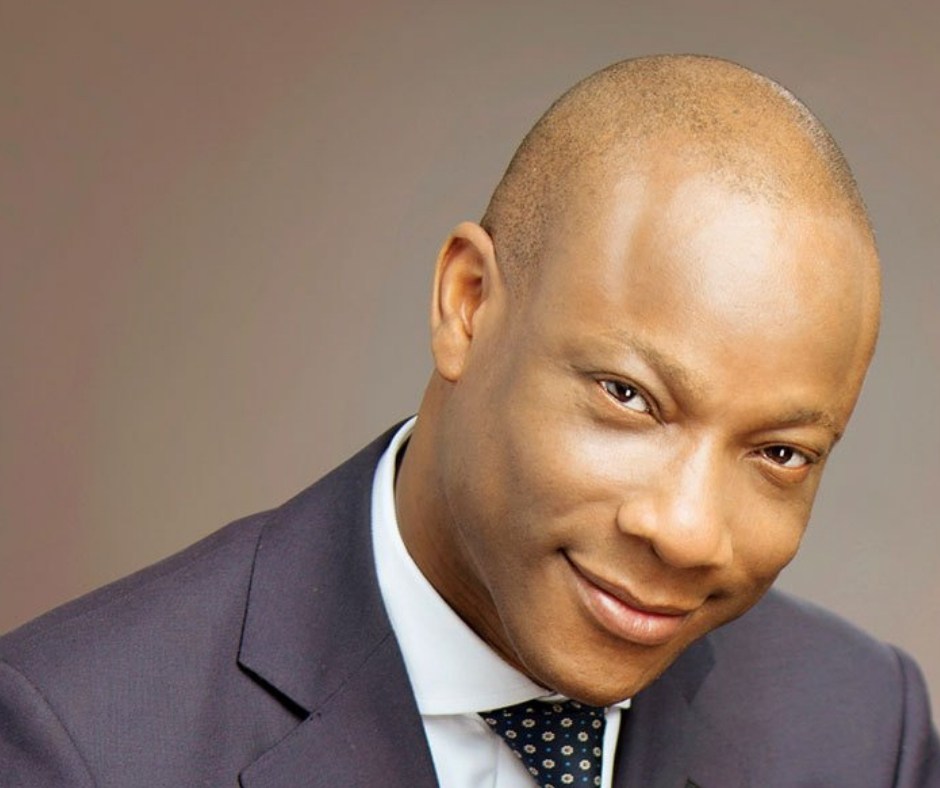
Segun Agbaje led GTCO’s Controversial N1 Trillion Profit: A Facade of Financial Triumph?
In a country facing soaring inflation and struggling startups, Guaranty Trust Holding, GTCO’s recent claim of a staggering N1 trillion profit raises eyebrows rather than celebrations. This figure, announced by CEO Segun Agbaje, appears less a beacon of success and more a troubling indicator of systemic issues within Nigeria’s banking sector.
Critics argue that GTCO’s reported profits stem from questionable practices rather than genuine financial growth. Many see Agbaje’s announcement as emblematic of a banking culture that prioritizes profit over customer welfare. Instead of nurturing innovation, GTCO’s approach has allegedly involved significant overcharging, dubious fees, and predatory lending practices that have eroded trust among its clients.
The disbelief among Nigerians is palpable. In an economy where businesses are cutting back and inflation is rampant, GTCO’s reported profits seem implausible. Industry experts and auditors have raised alarms, questioning the legitimacy of such gains. The prevailing sentiment is that these profits are not the result of sound banking practices but rather of exploiting customers.
Accusations against GTCO are mounting, with corporate clients like Innoson and Stallion Group calling for forensic audits. These businesses are beginning to suspect that their long-standing loyalty has been met with exploitation, as they uncover discrepancies in their accounts. A notable case is billionaire Femi Otedola, whose audit has prompted others to scrutinize their dealings with GTCO, revealing patterns of overcharging and illicit deductions.
Instead of contributing positively to Nigeria’s economic landscape, GTCO under Agbaje has been accused of engaging in practices that harm the very clients it serves. The bank’s focus appears to be on profit maximization at any cost, raising concerns about its impact on businesses and individuals alike.
As pressure builds, stakeholders are urging the Chairman of the Federal Inland Revenue Service (FIRS), Zacch Adedeji, to investigate GTCO’s practices and ensure that the full 35% tax on the reported profits is enforced. However, the call for accountability extends beyond tax collection; there is a growing demand for broader reforms within Nigeria’s banking sector to promote transparency and ethical practices.
As scrutiny of GTCO intensifies, Agbaje’s claims of financial success are increasingly viewed as a fragile façade, raising questions about the integrity of the banking system as a whole.
South East Development Commission: Rt Hon Ben Kalu’s Masterstroke By Ogo Okereke
Fifty five years after the civil war, the lingering effects of the war is still visible among the Igbo. Ndigbo being the worst hit of the civil war, still bear scars from the war,with ongoing displacement, poverty, trauma, environmental degradation, security concerns, infrastructural deficit and marginalization.
At one time or the other, past Nigerian presidents made varying efforts to address the negative effects of the civil war on the Igbo people, but they all left limited impact.
The most striking was the 3R sophistry by General Yakubu Gown in January 1970. Gowon had assured the world that there would be Reconciliation, Rehabilitation and Reconstruction (3R), of the Igbo land,as a result of the war ravages, but 54 years after, the South East has witnessed the direct opposite of the 3Rs, even in exponential proportion.
In a similar move, General Olusegun Obasanjo, established the South East Development Initiative(SEDI), to address regional development challenges, but the challenges still persisted.
Alhaji Shehu Shagari made a corresponding effort in his launching of the Presidential Task Force on Rehabilitation and Reconstruction, for the sole purpose of addressing the civil war’s effects, but the impact was small scaled,due to his short tenure in office.
Other efforts by Gen Ibrahim Babangida,spanned across the introduction of the National Commission for Refugees,Displaced Persons and Rehabilitation to confront the plight of war-affected communities.
Gen Sabi Abacha, came up with the National Council on Rehabilitation and Reconstruction, while President Good luck Ebele Jonathan, launched the Presidential Committee on Dialogue and Peace in the Niger Delta, which included initiatives for the South East. He also established the Alvan Ikoku Federal College of Education, to promote education in the region.
President Muhammadu Buhari in his own dimension to tackle the region’s infrastructure deficit, began the construction of the second Niger bridge, the Enugu-Portharcourt Expressway and also, formed the Presidential Committee on South East Initiative (PCSEI), to handle the regional development challenges.
While these attempts were aimed to grapple with the negative effects of the civil war, they have been criticized for being inadequate,slow paced or politicized. The South East region still demands sustained attention and investment to fully handle the effects of the civil war. These were the pitfalls of past efforts to reposition the region.
None of the struggle by past national leaders could actualize the setting up of a South East Development Commission(SEDC), that will solely tackle head on the numerous challenges facing Ndigbo from education,healthcare, marginalization, security, infrastructure, and others.
Several Igbo leaders had equally attempted to bring the South East Development Commission Bill to Law, but Rt Hon Benjamin Kalu’s efforts remained phenomenon.
Let me quickly give an overview of the actions of some of our Igbo representatives in actualizing this course,so you could appreciate better, the leadership excellence of the current Deputy Speaker of the House of Representatives.
Senator Ike Ekweremadu in 2015, sponsored a Bill similar to the SEDC, but it didn’t pass the second reading. Senator Enyinnaya Abaribe in 2017, introduced a Bill,but it stalled,due to lack of support. Governor Dave Umahi in 2018, advocated for a South East Development Commission,but his efforts were met with limited success. In 2019, the Ohanaeze Ndigbo, the highest socio-cultural organization in Igbo land, went a step higher in pushing for the actualization of SEDC, but it did not gain traction.
Rt Hon Benjamin Kalu in 2020, rewrote history, by successfully sponsoring the SEDC Bill which passed the second reading and eventually passed into Law in 2024. This can only be likened to GRACE.
Interestingly, the passage of the South East Development Commission Bill to Law, marks a significant milestone in the quest for a regional development and growth. The ground breaking legislation sponsored by the indefatigable number 6 citizen of the country,is a testament to his unwavering commitment to the welfare ane progress of the region. The combination of President Bola Ahmed Tinubu and the Deputy Speaker,Rt Hon Benjamin Kalu, broke the over 54 years jinx with the SEDC Law.
President Tinubu has shown a major departure from the Buhari’s regime, by signing the SEDC Bill into Law. This further shows his intention about the development of the South East region and his believe in building the nation in the fulcrum of fairness, equity and unity, hence his commitment to ensuring equitable development, inclusive governance,and the provision of qualitative services to all Nigerians, no matter where they reside,while knitting more tightly together the national fabric.
Like the North East Development Commission (NEDC), which brought tremendous transformation in the North East, especially on the area of humanitarian support (where Internally Displaced Persons and victims of insurgency were aided), education/healthcare support(schools and healthcare facilities are being built and upgraded), economic empowerment; through skills training, entrepreneurship support and job creations and initiatives. Environmental remediation of areas in the region suffering ecological issue, pollution,among other interventions, the South East Development Commission will facilitate the development of critical infrastructure such as roads,bridges and public buildings in the South East region. The commission can implement policies and programs to boost economic growth, create jobs, and provide access to credit facilities for entrepreneurs and small businesses. Under education and healthcare, the SEDC can invest in education and healthcare infrastructure, improving access to quality education abd medical care.
SEDC will address environmental degradation by cleaning up pollution,rehabilitating damaged ecosystems, and promoting sustainable practices.The commission will ensure Ndigbo have a stronger voice in national politics and decision-making processes.
It can promote and preserve Igbo language and culture, collaborating with security agencies to address insecurity challenges in the region, manage special intervention funds to address specific regional challenges.
The South East Development Commission can foster economic integration and cooperation among southeastern states, addressing historical injustices and lingering issues from the civil war, such as, rehabilitation of war-affected areas and compensation for victims.
While past efforts to reintegrate the Igbo people met minimal result, the SEDC which covers the five eastern states of Abia, Anambra, Ebonyi, Enugu and Imo, would go a long way to assuage the feelings of the Igbo with respect to the reconstruction and rehabilitation of roads, houses and other infrastructural damages suffered by the region, as well as,tackle ecological problems and other related environmental or development challenges in the region.
However, by addressing these issues, the SEDC would help to bridge the developmental gap, promote economic growth, and improve the overall well-being of Ndigbo.
The key point of discussion is that the South East Development Commission, stands out from previous initiatives, as it incorporates vital elements that guarantee its long-term viability and success,such as:
*Legislative Backing:The commission is legislatively backed, giving it a strong legal foundation and authority to operate.
*Structured approach: SEDC has a clear structure, mandate, and funding mechanism, ensuring a systematic approach to development.
*Regional focus:The commission is specifically focused on the South East region, addressing its unique challenges and needs.
*Inclusive representation: It has a board comprising representatives from each South East state, ensuring diverse perspectives and regional buy-in.
*Comprehensive scope: The commission’s mandate covers various aspects, including infrastructure, education, healthcare, and economic development.
*Sustained commitment:SEDC is designed to be a long-term initiative, ensuring consistent effort and progress.
*Community engagement:It encourages community participation and ownership, fostering grassroots support and inclusivity.
*Accountability mechanisms:It has built-in accountability mechanisms, ensuring transparency and effective use of resources.
Though past efforts, while well-intentioned, often lacked one or more of these elements, limiting their impact and sustainability. The SEDC law addresses these gaps, providing a robust framework for meaningful reintegration and development.
At this juncture, it won’t be out of place if I say that Rt Hon Benjamin Kalu is not playing politics of rice and wrappers, but diving into the mainstream of governance, which goes beyond just touching the lives of an individual or group of people. Myopic critics would seek for mere empowerment for a set of people, but a strategic thinker, seeks for lasting avenues that could create endless opportunities for the entire region. He has created a platform for coordinated development, empowering the region to unlock its vast potential. “What no past Igbo leader could ever achieve, Ben Kalu broke the jinx”.
He made a historic achievement that can positively impact the lives of millions, leaving a lasting legacy. He prioritized the region’s interest over his personal gain and has established a precedent for future leaders to follow, encouraging them to prioritize regional development.
BOK as he is fondly called by friends, has demonstrated foresight and understanding of the needs of his region with an unwavering commitment,which showed dedication and perseverance in pushing for the Bill’s passage,despite potential obstacles.
This goes ahead to remind me of the words of Zig Ziglar that says,”With hardwork and determination,you can achieve anything you set your mind to”.
His suave, assertive, sagacious, outspoken and visionary dispositions were highpoints in achieving the South East Development Commission and they remained a very inspiring and veritable source of hope for Ndigbo. “Indeed, Rt Hon Benjamin Kalu,is a beacon of hope and a pillar of transformation for the South East region”.
The South East Development Commission, a long-awaited initiative decades in the making, was finally brought to fruition by Rt Hon Benjamin Kalu and his team.
We inhabit a media landscape where falsehoods are skillfully manipulated to masquerade as verifiable facts, unchecked propaganda is employed as a tool for character assassination, and opportunistic individuals like Jackson Ude, notorious for peddling fake news, resort to unscrupulous tactics such as blackmail, mischief, and propaganda to secure financial gain and satiate their self-interest. These actions undermine the fundamental objective of effective communication, which is to convey accurate information and achieve a desired outcome based on verifiable facts. Instead, they create a false narrative and distorted history, perpetuating misinformation that is ingested as fact by an unsuspecting future generation.
Throughout human history, communication has played a vital role in shaping social existence, even in primitive societies. Consequently, it is essential to preserve the integrity and values of communication, ensuring that the information disseminated is accurate, unbiased, and serves the public good. This may involve exposing wrongdoing and promoting truthfulness, thereby maintaining the sanctity of communication.
A medium that inflicts harm, devastation, and provokes irate phone calls and libelous lawsuits is unlikely to endure. Ethical journalism is characterized by objectivity, fairness, factual accuracy, and a commitment to balancing facts with truths, as well as presenting diverse perspectives. Fundamental principles of good reportage dictate that journalists must refrain from fabricating information, ensuring that their reporting is not a product of imagination or motivated by personal gain, such as financial need. This expectation is particularly pertinent for individuals seeking to establish a reputable career and legacy in journalism and activism, unlike opportunistic blackmailers like Jackson Ude. Genuine journalists must adhere to these hallmarks, cultivating a trustworthy and respected voice, rather than succumbing to unethical practices that compromise the integrity of their profession.
In the past, Jackson Ude has consistently employed a survival tactic of making unsubstantiated allegations against various individuals within President Bola Ahmed Tinubu’s inner circle, including the Chief of Staff, Femi Gbajabiamila, the President’s son, Seyi Tinubu, and a former APC presidential aspirant and philanthropist, Mr. Jack Rich. Therefore, it came as no surprise when Ude recently made another baseless allegation, as he has a history of using his media platform to engage in destructive behavior, besmirching the reputations of influential individuals who cross his path.
Ude’s modus operandi involves reporting that is devoid of factual basis, instead indulging in groundless speculation and dementia. His brand of journalism is an absurd and characterless form of gutter and blackmail reporting, reliant on a stockpile of falsehoods, obnoxious, and villainous cheap gossip. This approach is exemplified by his tendency to prioritize sensationalism over fact-based reporting, thereby tarnishing the reputations of those he targets.
Jackson Ude has recently disseminated another installment of his fabricated narrative, opportunistically exploiting the ongoing #EndBadGovernanceInNigeria protest to resurrect his waning notoriety on social media and garner renewed validation and relevance. His motivations are twofold: to seek financial compensation from a platform based on the impression metrics generated by his post, and to revive his flagging popularity.
In his latest claims, Ude alleges that former Governors Yahaya Bello of Kogi State and Nasir Elrufai of Kaduna State have been clandestinely sponsoring the Northern protests, orchestrating and financing them from the Niger Republic. He further asserts that they commissioned the production and distribution of Russian flags in the North, insinuating a sinister plot to destabilize the region.
Ude’s spurious claims continue with the accusation that both former Governors are colluding with the Nigerien Military Junta, led by General Abdourahamane Tchiani, to undermine the stability of Northern Nigeria and, by extension, the entire country. He alleges that they are secretly engaging with military officers through intermediaries, including Minister of State, Defence, Mohammed Bello Matawalle, with the ultimate goal of toppling the government. Additionally, Ude claims that Matawalle and Usman Shugaba, the Chief Personal Security Officer (CPSO) to President Asiwaju Bola Ahmed Tinubu, are providing sensitive information to Yahaya Bello and Elrufai, further perpetuating the alleged conspiracy.
It is perplexing to consider whether Jackson Ude’s vocalizations regarding the purported threats surrounding President Tinubu stem from a genuine concern for the administration or an ulterior motive. One might question whether Ude has regained mental clarity, enabling him to accurately identify potential threats to President Bola Ahmed Tinubu.
However, a closer examination reveals that Ude’s actions are, in fact, a deliberate attempt to undermine and destabilize President Tinubu’s administration. His strategy involves manipulating the President into perceiving allies as adversaries and embracing enemies as confidants. Nevertheless, these allegations remain entirely baseless, devoid of even a shred of evidence.
This development only serves to reinforce the notion that Jackson Ude is a mercenary tool, exploited by those willing to pay for his services, with the aim of subverting democratic principles. His efforts to compromise the nation’s internal security have proven futile, and, ironically, the unity among Nigerians continues to strengthen, transcending political divisions. In essence, Ude’s machinations have been exposed as a desperate attempt to sow discord and chaos, but his endeavors have ultimately backfired, highlighting his role as a pawn in the hands of those seeking to undermine the country’s stability.
It is pertinent to highlight that Jackson Ude’s propensity for blackmail is extensively documented, with a plethora of instances demonstrating his unscrupulous nature. Notably, his attempt to extort N200 million from Ngozi Okonjo-Iweala by disseminating fabricated news stands as a testament to his dubious integrity. The subsequent legal action taken by Okonjo-Iweala, resulting in a victorious court ruling, further underscores Ude’s lack of credibility.
Ude’s history of targeting high-profile individuals for extortion is a recurring pattern, as evidenced by Abubakar Ismaila Isa’s lawsuit against him for publishing defamatory content. This raises fundamental questions about the trustworthiness of an individual with such a questionable track record.
Furthermore, Ude’s credibility suffered a significant blow when he impersonated the NYPF coordinator to call for bogus probes, prompting the NYPF itself to disavow any association with him. This incident exemplifies Ude’s serial impersonation and blackmail tactics.
The courts have repeatedly restrained Ude from publishing false articles, underscoring his penchant for utilizing fake news as a tool for blackmail. The consistency of this pattern, evident in his dealings with Okonjo-Iweala and Abubakar Ismaila Isa, raises a critical question: Why would any discerning citizen take Jackson Ude’s allegations seriously, given his demonstrable history of dishonesty and extortion?
The Jackson Ude case serves as a poignant reminder of the media’s darker underbelly and the potential harm that can arise from unsubstantiated allegations. The recent smear campaign is a prime example of this phenomenon. However, as is often the case, the President remains unflappable in the face of such baseless attacks.
In reality, Ude is driven by a singular mission: to engage in frivolous and self-destructive controversies designed to sully the reputations of public officials and citizens who refuse to capitulate to the demands of powerful vested interest groups. These groups, accustomed to getting their way, resort to mudslinging when their expectations are not met.
Ude’s publishing endeavors are characterized by a glaring lack of decorum and mental stability, with quackery seemingly serving as his guiding vision, mission, and central theme. In this modern era, no discerning intellectual should lend credence to someone as unsophisticated as Jackson Ude.
Ultimately, Nigeria’s unity remains unshakeable, impervious to the machinations of those who seek to divide and conquer through deceit and misinformation. The nation’s resilience and cohesion will continue to thrive, undeterred by the likes of Ude and his ilk.
Goulding wrote this piece from the United Kingdom.
DOKUBO-ASARI IS NOT AGAINST PROTEST BUT ANARCHY
-Arch Tom Inko- Tariah
Arch Tom Inko- Tariah, President of the
DWELLERS OF COASTAL AND WATERWAYS COMMUNITIES OF AFRICA (DCWCA) has described as untrue and mischievous representations in the media space that Alhaji Mujahid Abubakar Dokubo-Asari, champion of Resource control and minority rights is against the present protests in Nigeria.
According to Arch Tariah, mischief makers on social media cut, pasted and edited a lengthy speech given by the Alabo Edi Abali of Kalabari Kingdom at a recent NDDC event in Port Harcourt to give it a different connotation.
In a statement issued by Arch Tom Inko Tariah says claims suggesting that Alhaji Mujahid Abubakar Dokubo-Asari, the prominent advocate for minority rights in the Niger Delta is wrong, he stressed that Dokubo-Asari known for his lifelong dedication to fighting for the people cannot change at this stage of his life,
“what he is actually against is anarchy and any attempts to overthrow an elected government through a coup.”
Tariah highlighted Dokubo-Asari’s unwavering commitment to standing by the people and fighting for justice and equality throughout his career. He noted that while Dokubo-Asari may have expressed concerns about the potential for violence and chaos during the protests, his stance is rooted in a desire to uphold democratic principles and prevent any destabilization of the country.
The full video of his speech is hereby included with the transcript.
” Let me tell you something. Don’t pretend about it. We are all sitting here peacefully. It will be good for you to visit Liberia, visit Somalia…visit Venezuela. I was in Libya, I was a friend of Ghaddafi, I lived in Libya. Libya was paradise. Today Libya is hell-fire. Ninety percent of those who led the anarchy against Ghaddafi are all dead.
Let nobody decieve you that there will be a peaceful protest. It’s not a protest. It’s a call to anarchy. Have you read the ten point demand? A change of government, a change of constitution, and a change of this and that. Is that demand for good governance? That is a coup and we will resist it.
People have been hungry and this is not the first time. Nobody is happy that people are hungry. We are all working so that the burden on the shoulder of the people will be lifted and carried away.
The President has done this. The President is doing this. He is not doing that. When a government comes to power, we seize to be political party members. We seize to be PDP or APC or YPP or any other political party. We all now have a party called Nigeria. Party Nigeria, that’s what we are and we must all work, no religion says you must pray for your government to fail. Anywhere you see a small thing for your government to fail, immediately you jump in, the government must fail . This government will not fail. This government will stand. We might have differences. We must tell those in government that if you are in government, you must not use your power in government to suppress people, to cause anarchy.
There are people in government and say we will deal with you. But na me dey tell you say you no fit deal with me. So those who think they can deal with us should not spoil the government of Ahmed Bola Tinubu. Me, I have known Ahmed Bola Tinubu, I know him to his bedroom. And I know there is no President that has come to this country that is like Ahmed Bola Tinubu. All of you know I don’t flatter people. In fact, I specialize in abusing people. President Ahmed Bola Tinubu, Sammy Ugbuku and Dennis Otauru and others were in the trenches with us. This is the first time that a President that is one of us is in Aso Rock and that is why we must support him because we know he is dealing with people who do not understand what we went through and what we are. We have paid our price from June 12 till today. We have gone to prison, we have been underground, we have been buried alive. We have every right to earn our respect. And we are telling you, don’t go .
What they want to come and do is to blow pipelines, to intercept trucks, trucking. To intercept barging, barges. You heard what happened in Imo State yesterday where they killed police officers, that is what they want to do and we must resist them. We must not allow them to bring their anarchy here, but if you get stronghead,you bring am, I no be Tinubu, I no dey government, I no be Chief of Army Staff, I no be IG of Police, if you do anyhow, you go see anyhow. Don’t bring your protest here. The protest does not concern us. And anywhere you are doing your protest, I dey there and you are doing your protest abd I know your protest will be a threat to me, I will be a threat to you. That is it. I am not going to romance my words. I am not going to do si si si with you. I am not a sisi. My name is Mujahid Dokubo-Asari and I am going to live up to my name and I will stand firm. I am not doing it because Bola Ahmed Tinubu will give me anything. I am doing it be because I believe if I don’t do it, my life will be in danger, the lives of my children will be in danger and the lives of my compatriots, all of you who are here will also be in danger. It is wrong for us to be part of or even conceive this protest. Those who have lost elections should prepare for 2027. Thank you.”
Tariah added,
“Alhaji Mujahid Abubakar Dokubo-Asari has always been a champion for the rights of the marginalized communities in the Niger Delta and beyond. His focus has been on addressing systemic injustices and promoting peaceful resolutions to grievances,” Tariah stated. “It is crucial to understand that his concerns lie not with the legitimate grievances of the protesters but with the dangers of anarchy and attempts to subvert the democratic process through unconstitutional means.”
Tariah emphasized the need to differentiate between peaceful protests and actions that could lead to violence or threaten the stability of the country. He underscored Dokubo-Asari’s advocacy for a strategic, organized approach to effecting change, rather than resorting to chaos or lawlessness that could undermine the progress made in advancing the rights of all Nigerians.
“Alhaji Mujahid Abubakar Dokubo-Asari’s stance against anarchy and a coup should be viewed in the context of his deep-seated commitment to the welfare and future of all Nigerians, especially those who have long been marginalized. His position reflects a dedication to upholding the rule of law and ensuring that democratic institutions remain intact,” Tariah clarified.
As Nigeria continues to grapple with the multifaceted challenges facing the country, voices like Alhaji Mujahid Abubakar Dokubo-Asari’s play a crucial role in fostering dialogue, promoting understanding, and advocating for peaceful solutions. By engaging in constructive discourse and upholding the values of justice, equality, and democracy, they contribute to building a more just and inclusive society for all.
Planned Nationwide Protests: Adobokashi For Edo Welfare Initiative, AFEWIN, Offers Advisory Tips To Citizens And Governments
The planned nationwide protest against hunger and hardship slated to take off from August 1, 2024 in Nigeria has caught the attention of *Adobokashi For Edo Welfare Initiative, AFEWIN,* a registered non-partisan advocacy group, seeking improved socio-economic and democratic governance for Edo State.
In an online emergency meeting on Tuesday, July 30, attended by the local and international leadership of the NGO, AFEWIN noted, that the economic situation in Nigeria which also affects the people of Edo State, is “greatly worrisome.”
The NGO emphasized that much as the citizens are at liberty to express their grievances over unfriendly government policies, they should shun untidy arrangements that would inspire hoodlums to hijack the process with likely resultant lose of lives and destruction of property.
A statement issued by AFEWIN Secretary, Mr. Fidelis Anenih stated that the clarification has become imperative in view of the media hype and the frightening dimension the planned protests have taken.
According to the statement, the President of the NGO, Mr. Benson Ehiagwina, a Japan based businessman said: “Nigeria is in the news again and global focus is on Nigeria but for the wrong reason.
“The United States, United Kingdom, and Canada have issued security alerts to their citizens in Nigeria, warning of potential violence during the planned nationwide protests tagged: #EndBadGovernance protest.
“As an NGO, we are worried about what is happening back home in Nigeria.
“We are calling on the federal government of Nigeria to recalibrate its policies to avoid a repeat of what is currently playing out.
“We are also calling on the National Assembly to square up with their oversight responsibilities so that annual budgets can be achieving above 80 percent implementations for the citizens to feel the impacts of their votes.
“While Edo State will not be isolated from this planned protests, our previous advisory to the government and citizens of the State on the basis of sincere commitment to a better Edo, still stands.
“In the planned protests, Edo citizens should endeavour to be different by shunning roadblocks, traffic congestion, physical confrontations, firing of guns, breaking into shops to steal and destruction of both government and private properties,” President Ehiagwina advised.
The NGO however, offered the following cautionary tips
Titled: Advice to the Protesters in Edo State.
It reads:
Maintain Peaceful Intent
Peaceful protest its fundamental human right of the citizens. It is essential to remember the core purpose of your protest. Keep the focus on peaceful expressions of discontent. Non-violence can often lead to more constructive dialogue and change.
Organize Effectively
The protest organizers should ensure they plan the protest thoroughly. Have designated leaders, communicate clear messages, and establish a safe route. Ensure everyone understands that violence or destruction is not acceptable.
Engage with the Media
Utilize media coverage to share the purpose and messages of your protest. Ensure that your narrative focuses on economic hardship and the need for solutions rather than any acts of violence.
Invite Dialogue
If possible, invite government representatives or civil society leaders to engage in discussions during the protest. This could lead to a constructive exchange of ideas and show that your intentions are rooted in seeking solutions.
Educate Participants
Prepare all participants with information about the issues being protested, as well as strategies for de-escalating any potential tensions. Knowledge is a powerful tool.
Document the Process
Consider having legal observers present to document the event, ensuring that any interactions with the police or government officials are recorded. This can help protect protesters’ rights.
Stay United
Foster an atmosphere of solidarity among participants. A unified front communicates strength and purpose, while division can lead to misunderstandings and conflict.
Message to the Government
Listen to the Citizens
It is crucial for the government to actively listen to the concerns of its citizens, especially regarding economic hardship. Taking their grievances seriously is a step towards rebuilding trust and fostering a sense of community.
Engage in Meaningful Dialogue
Establish channels for open communication with protest leaders and community representatives. This can pave the way for collaborative problem-solving that addresses the economic challenges people are facing.
Implement Supportive Policies
Beyond acknowledging the protests, the government should consider implementing policies that directly alleviate economic hardship, such as job creation initiatives, social welfare programs, and addressing inflation.
Demonstrate Empathy
Show understanding and compassion for the struggles faced by ordinary Nigerians. A government that communicates care for its citizens’ welfare will foster loyalty and reduce tensions.
Promote Non-violence
Encourage peaceful dialogue and protest, and assure citizens that they can express their concerns without fear of violence or repression. This will promote a more stable environment for all.
“By adherence to these advisory and fostering a climate of peace and communication, both the protesters and the government can work together towards solutions that benefit everyone,” the NGO stated
Rivers: Group Welcomes Appeal Court Judgement Rejecting Tenure Elongation for Ex-LG Chairmen
The National Vanguard for Rule of Law (NVRL) has commended the Court of Appeal’s decision to strike out two appeals filed by former Local Government Chairmen in Rivers State, loyal to former governor Nyesom Wike.
The appeals sought to extend their tenure, but the Court of Appeal found them to be without merit.
In a statement by its President, Comrade Johnson Babatunde, the NVRL praised the justices of the Port Harcourt Division for their courage and integrity in delivering a sound judgment, despite alleged attempts to induce them with money to pervert justice.
He said the judgement is a resounding victory for democracy, the rule of law, and the people of Rivers State.
Babatunde added that the ruling serves as a strong message to politicians who seek to exploit loopholes and manipulate the system for personal gain.
The group believes that this judgement gives Nigerians hope in the judiciary and demonstrates that the court remains the hope of the common man.
The appeals, marked CA/PH/137M/2024 and CA/PH/145M/2024, were filed by Hon. Enyiada Cookey-Gam and six others, challenged the decisions of the lower court on the elongation of their council leadership tenure.
However, the Court of Appeal found the appeals to be without merit and consequently struck them out.
Babatunde said: “We commend the justices of the Portharcourt Division for once again delivering a sound judgment, upholding the rule of and giving Nigerians hope in the judiciary.
“We understand the enemies of Rivers State have been inducing judges with money to deliver black market judgments in their favour. We believe that the Justices of the Portharcourt Division must have been tempted with all forms of inducement to pervert justice, but as men of courage and integrity, they have chosen to uphold the rule of law.
“We criticize the former Local Government Chairmen for their attempt to subvert the democratic process and extend their tenure illegally.
“Their actions were driven by a desire for self-preservation and a disregard for the welfare of the people they were elected to serve. Their tenure elongation bid was a brazen attempt to defy the constitution and perpetuate themselves in office.
“We commend Governor Simi Fubara and the Rivers State Government for their unwavering commitment to upholding the constitution and defending the interests of the people.
“We urge the government to continue to prioritize the welfare and well-being of the people, and to ensure that democratic governance is entrenched in Rivers State”.
The NVRL also called on Nigerians to support judges who deliver sound judgments and urged the people of Rivers State to continue to support Governor Fubara in delivering dividends of democracy to the state.
The group encouraged the people to prepare for the forthcoming local government elections to replace those who sought to extend their tenure through illegal means.
Lawyers applaud Gov Fubara’s remarkable performance on one-year anniversary
A Coalition of Lawyers in Nigeria under the aegis of Lawyers for Justice has rated Governor Siminalayi Fubara high on his first anniversary in office.
In a statement signed by its President, Moses Okino, the group said it came to this conclusion after a comprehensive assessment tour across the state to evaluate the governor’s performance.
According to Okino, the tour covered various local government areas, where the coalition interacted with citizens, community leaders, and project beneficiaries.
The Lawyers for Justice acknowledged the governor’s efforts in revitalizing the state’s economy, improving security, and enhancing the overall quality of life for Rivers State citizens through infrastructural development, education, and healthcare, among others.
“After a comprehensive tour of Rivers State, our members had the opportunity to assess and evaluate Governor Fubara’s achievements, and we are impressed by his remarkable leadership, vision, and commitment to the development of the state,” the statement said.
“In the past year, Governor Fubara has demonstrated a clear understanding of the needs of Rivers State and its people. His administration’s accomplishments in various sectors, including infrastructure development, education, healthcare, security, and economic growth, are a testament to his dedication to good governance and the rule of law.
“We are particularly impressed by Governor Fubara’s commitment to the rule of law and his administration’s respect for human rights. His efforts to promote peace, justice, and reconciliation in Rivers State are laudable, and we believe that his leadership style is a model for other states in Nigeria to follow.
“As lawyers, we recognize the importance of good governance, accountability, and transparency in government. We are pleased to see that Governor Fubara’s administration has demonstrated these qualities in its dealings with the people of Rivers State.
“We commend Governor Fubara for his exceptional leadership and his commitment to the development of Rivers State. His achievements in one year are a testament to his dedication to the people of Rivers State, and we believe that he is on the right path to leaving a lasting legacy.
“We encourage Governor Fubara to continue his good work and to remain focused on his vision for a better Rivers State. We also call on the people of Rivers State to continue to support their Governor in his quest to develop the state and improve the lives of its citizens.”
In examining the realm of governance and public resource management, one would agree that, accountability is a sacrosanct principle that serves as the bedrock of trust between the government and its citizens. However, in Rivers State, Nigeria, this fundamental principle appears to be under assault, as a plethora of allegations ranging from misconduct to malfeasance swirl around the former governor, Mr. Wike. The people of Rivers State have endured immense suffering under Wike’s leadership, and it is now incumbent upon Governor Sim Fubara to take swift and decisive action to investigate these egregious wrongdoings, hold perpetrators accountable, and deliver long-overdue justice to the victims. By doing so, Governor Fubara can begin to restore the trust that has been eroded and ensure that the principles of accountability and good governance are upheld in Rivers State.
The burning question on many minds is, “When will Governor Fubara probe Wike?”
The tenure of Mr. Wike as the governor of Rivers State was marked by a plethora of controversies and allegations of corruption, which have left an indelible stain on his legacy. One of the most egregious accusations leveled against him is the perpetration of inflated contracts, wherein contracts awarded during his tenure were allegedly grossly overpriced, resulting in a significant depletion of the state’s resources. If these allegations are substantiated, it would constitute a brazen betrayal of public trust, a flagrant violation of the principles of transparency and accountability, and a egregious abuse of power.
Moreover, Mr. Wike stands accused of leaving the state in a financially precarious situation, wherein the state’s debt profile skyrocketed under his leadership, plunging the state into a financial crisis. This has had a devastating impact on the state’s ability to fund critical infrastructure and social services, thereby exacerbating the suffering of the citizens of Rivers State and imperiling their welfare.
Among the multitude of allegations levied against Mr. Wike, the most heinous and egregious is the forceful expropriation of private property, a transgression that has left a trail of disillusionment and suffering in its wake. According to a report, the women of the Oginigba community in Rivers State, driven by desperation and a sense of injustice, staged a protest against the brazen seizure of their ancestral land, perpetrated by Mr. Wike through the instrumentality of the state government machinery. This egregious act, if proven, constitutes a flagrant violation of the rights of these women, a gross abuse of power, and a stark testament to Wike’s disdain for the rule of law and the fundamental rights of citizens. The forced takeover of private land, a blatant manifestation of Wike’s authoritarian proclivities, has left an indelible stain on his legacy, and its repercussions continue to reverberate, causing untold suffering and hardship for the affected individuals.
The evidence of Wike’s plundering of Rivers State’s wealth is manifest in his extensive portfolio of properties, including the Hypercity building in Ikoku, a multifaceted complex on Rumuomasi by old Aba road, which serves as a hub for esteemed brands like SHOPRITE, Cinema film House, Electronica, and others, as well as the Signature hotel in G.R.A, a former residence on William Jumbo street in Old GRA, Trans Amadi by BEWAC, AFP Plaza by Stadium, site for hospital by stadium road, and his current residence by Ada George. All these assets in Port Harcourt alone.
These few properties in Port Harcourt, traceable to Mr. Wike, are merely the tip of the iceberg. It is mind-boggling to contemplate the numerous properties scattered across various cities in Rivers State, not to mention the staggering hundreds of properties spread across different states in Nigeria, all allegedly linked to Mr. Wike’s name. The putrid stench of corruption wafting from his property acquisitions and takeovers demands a thorough investigation by the EFCC. Meanwhile, the people of Rivers State were languishing in excruciating poverty, while Wike was shamelessly amassing a vast empire of properties through illicit means, all at the expense of the state’s financial well-being.
In light of these grave allegations, it is absolutely essential that Governor Fubara takes swift and decisive action to investigate Mr. Wike’s tenure, ensuring a thorough and transparent probe that uncovers the truth behind the myriad accusations. The citizens of Rivers State have a rightful expectation to be informed about the veracity of these allegations, and to witness the delivery of justice and the recovery of misappropriated public resources, should these allegations be substantiated.
The consequences of Wike’s alleged malfeasance are nothing short of catastrophic, leaving the state mired in debt and stifling its development. The egregious inflation of contracts has resulted in a egregious depletion of the state’s resources, while the forceful takeover of private property has wreaked havoc on countless lives and livelihoods. Therefore, Governor Fubara must demonstrate unwavering resolve in reversing this damage, ensuring that those responsible are held accountable and brought to book, thereby restoring the trust and confidence of the citizens in the government.
Governor Fubara has a unique and auspicious opportunity to tangibly demonstrate his unwavering commitment to the principles of accountability, good governance, and the rule of law. By initiating a comprehensive and exhaustive investigation, he can ensure that Mr. Wike is held accountable for his alleged actions, thereby sending a powerful message that no individual is above the law. This probe, if conducted in a fair, transparent, and unbiased manner, will not only restore public trust and confidence in the government but also serve as a testament to Governor Fubara’s dedication to upholding the highest standards of governance. Furthermore, the investigation provides a chance to recover misappropriated funds and assets, which can then be reinvested in the development and progress of Rivers State.
However, it is crucial that this probe adheres to the highest standards of fairness, transparency, and due process, avoiding any semblance of a witch-hunt or political vendetta. Instead, it must be guided by an unwavering commitment to truth, justice, and the rule of law, thereby ensuring its credibility, legitimacy, and ultimate success.
The investigation into Wike’s alleged malfeasance is egregiously belated, and Governor Fubara’s prompt intervention is imperative to rectify this egregious oversight. The necessity for a thorough probe cannot be overstated, as it is indispensable for uncovering the truth, holding accountable those who have perpetrated wrongdoing, and restoring the public’s faith in the government. The people of Rivers State deserve a leadership that is transparent, accountable, and prioritizes their well-being and the development of the state, and Governor Fubara must demonstrate his commitment to these principles by initiating a comprehensive investigation into Wike’s tenure.
The gravity of the allegations against the former governor necessitates swift action, and the people of Rivers State demand nothing less than a thorough and transparent investigation that culminates in justice being served. By fulfilling this duty, Governor Fubara will not only be upholding the sacrosanct principle of accountability but also restoring the people’s trust in the government, thereby paving the way for a brighter future for Rivers State.
It is solely through the conduit of a meticulous and uncompromising investigation that the truth can be unearthed, justice can be administered, and the trajectory towards a future marked by prosperity and equity for the people of Rivers State can be firmly established. This imperative underscores the urgent need for a thorough probe into Mr. Wike’s tenure, rendering the present moment the most opportune and propitious time to initiate such an inquiry, thereby ensuring that the quest for accountability, truth, and justice is not perpetually relegated to the realm of the forgotten, but rather assumes its rightful position at the forefront of the state’s agenda.