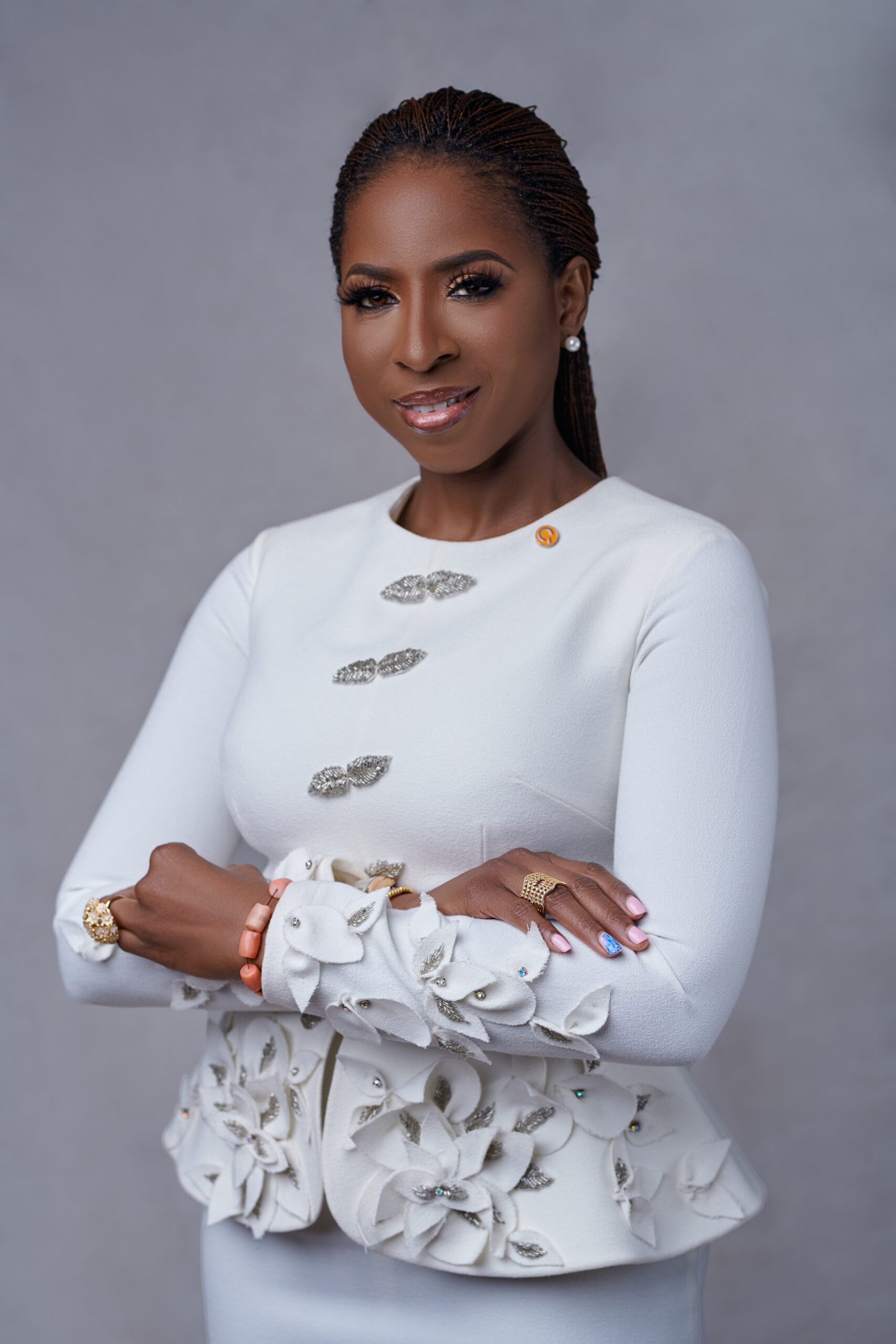


The Group Chief Executive Officer, Ecobank Transnational Incorporated (ETI), Ade Ayeyemi, has affirmed that the pan-African banking group is facilitating smooth and instant payments across Africa as countries start the implementation of the African Continental Free Trade Area Agreement (AfCFTA). Ayeyemi who made this assertion during an interview with the media recently pointed out that Ecobank has been able to effect international payment across the 33 countries where it operates on the continent through its Rapid Transfer platform. He reiterated that the bank’s platform can be scaled to accommodate other African countries under the AfCFTA based on their respective regulations.
According to the Ecobank Group Chief, the banking group is one of the key supporters of the AfCFTA which he believes will be of great benefit to both the continent and customers of the bank. “With this Pan-African exposure, the governments and our customers will re-evaluate their businesses to efficiently take charge of bigger opportunities. So, if you manufacture goods in Aba for the Nigerian market, you can now start thinking of how to expand your manufacturing capacity to be able to export across West Africa and also other African countries, not just looking at Nigeria as a market alone. And as you change your demand forecast, you need to now improve your capacity to produce and that will mean importing new machinery to expand your manufacturing base, develop bigger market and hire more people.”
He is optimistic that the introduction of the AfCFTA would curb the regulations and government policies limiting the flow of foreign exchange. “Banks will work with other banks like Afrexim Bank to provide a swift payment platform as Africa will be the first market for most African products. For instance, there is no need for Nigeria to import rubber from Malaysia when rubber is being exported by Côte d’Ivoire. It is better within the African space. So, there is a whole range of businesses that we are having conversations with our customers, the governments and the African Union, because of our pan-African presence.”
The AfCFTA which came into effect this January, aims at creating a single African wide market for goods and services. It will pave the way for rapid dismantling of impediments to cross-border trade leading to free movement of business, persons and investments across the continent, thus leading to the establishment of the Customs Union. It will bring together all 55 AU member states, covering a market of more than 1.2 billion people. It is set to be the world’s largest free trade area since the formation of the World Trade Organization In terms of numbers of participating countries.
Happy birthday to a Hollywood legend! James Earl Jones celebrated his milestone 90th birthday on Sunday, and got a lot of love from some of his famous friends and fans.
Jones’ booming voice, powerful gravitas and daunting screen presence have made him a true screen icon, and his impressive performances have left an indelible mark on pop culture throughout his nearly 70-year career.
As the voice of both Darth Vader in Star Wars and Mufasa in The Lion King, Jones has been an unforgettable and integral part of so many generations of movie fans. His body of work also includes award-winning performances in a slew of comedies and dramas — including Coming to America, The Sandlot, Field of Dreams and countless others.
It’s no surprise then that the celebrated figure was showered with love and effusive praise as he celebrated his big 9-0 on Sunday. Celebs including Regina King, Josh Gad, Wendell Pierce and many others took to social media to share the love.
The Oscar-winning actor recently spoke with USA Today about his plans for commemorating the milestone birthday.
“I will keep having to remind myself that it’s my birthday,” Jones shared. “I’ll make an exception and enjoy a slice of strawberry shortcake, my favorite!”
The actor told the publication that he is “feeling fantastic and grateful” and looking back at his career makes him “so proud of my work and accomplishments.”
“I love growing older and wiser with time,” Jones shared, adding that he plans to continue acting “for as long as I can.”
Lionel Messi was shown the first red card of his Barcelona career as they lost to Athletic Bilbao in the Spanish Super Cup final.
Messi, in his 753rd appearance for Barca, swung at Asier Villalibre in the final seconds of extra time – an incident spotted by the VAR.
Barca led twice through Antoine Griezmann but Oscar de Marcos and Villalibre, in the final minute, scored as Athletic replied each time.
Inaki Williams scored a fine winner.
The game in Seville was set to be remembered as an entertaining encounter and for Athletic’s second trophy since 1985, until the late drama.
Messi lashed out at goalscorer Villalibre off the ball in the 120th minute. The referee missed the clash at the time before viewing it on the VAR screen and dismissing Messi.
The 33-year-old had only been sent off twice before, both for Argentina – on his international debut against Hungary in 2005 and in the 2019 Copa America third-place play-off against Chile.
He could now be banned for at least four domestic games, with Super Cup suspensions carrying over to league and cup matches.
Barcelona were seconds away from winning the Super Cup for a 14th time – in what would have been a first trophy under Ronald Koeman’s reign. It would also have been an eighth Super Cup for Messi, in what could be his final season at Barca with his contract coming to an end this summer.
Griezmann put them ahead after Messi’s shot was blocked before De Marcos scored from Williams’ cross moments later.
Athletic’s Raul Garcia had a header disallowed by the VAR and then Griezmann converted from Jordi Alba’s cross.
But in the final minute substitute Villalibre volleyed home to force extra time. Williams’ excellent winner soon after the restart came as he got the ball on the edge of the box and curled into the top corner.
Athletic, who beat Real Madrid 2-1 in the semi-finals, have beaten Real and Barca in consecutive games for the first time since 1960.
The defeat comes just as Barca – who needed penalties to beat Real Sociedad in the semis – and their captain were finding form. It was a first defeat in 10 games for the Catalan side, while it ends Messi’s run of four goals in two games and six in five.
Troops of Operation TURA TAKAIBANGO in conjunction with the Air Task Force Operation LAFIYA DOLE have effectively destroyed 7 Boko Haram/ISWAP terrorists’ gun trucks and decimated several unconfirmed number of the terrorists when they attempted to attack their location at the outskirts of Marte in Marte Local Government Area of Borno State.
According to a signed statement by Brigadier General Bernard Onyeuko, Acting Director, Defence Media Operations, Defence Headquarters and made available to NAOSRE, the gallant troops, based on reliable information about the attack, had positioned themselves in an ambush site where they tactically withdrew to, and awaited the arrival of the terrorists before they opened fire which led to fierce battle that resulted in the successes recorded as indicated above.
The troops are still engaged in pursuit of the fleeing terrorists for further exploitation. Further details of interest to members of the public will be communicated later.
Existing Production Capacity of 27,000 barrels of oil equivalent per day Estimated 2P Reserves of 1.2 billion barrels of oil equivalent
Estimated Additional 1 billion barrels of oil equivalent of further exploration potential
Heirs Holdings (“HH”), the leading African strategic investor, in partnership with affiliated company Transnational Corporation of Nigeria Plc (“Transcorp”), Nigeria’s largest publicly listed conglomerate, announced today the unconditional acquisition of a 45% participating interest in Nigerian oil licence OML 17 and related assets, through TNOG Oil and Gas Limited (a related company of Heirs Holdings and Transcorp), from the Shell Petroleum Development Company of Nigeria Limited, Total E&P Nigeria Limited and ENI. In addition, TNOG Oil and Gas Limited will have sole operatorship of the asset.
The transaction is one of the largest oil and gas financings in Africa in more than a decade, with a financing component of US$1.1 billion, provided by a consortium of global and regional banks and investors. OML 17 has a current production capacity of 27,000 barrels of oil equivalent per day and, according to our estimates, 2P reserves of 1.2 billion barrels of oil equivalent, with an additional 1 billion barrels of oil equivalent resources of further exploration potential.
The investment demonstrates a further important advance in the execution of Heirs Holdings’ integrated energy strategy and the Group’s commitment to Africa’s development, through long term investments that create economic prosperity and social wealth. Heirs Holdings’ heritage and approach to business fundamentally underscores its commitment to inclusive development and shared prosperity with its host communities. Heirs Holdings is fully invested in the development of the Niger Delta region.
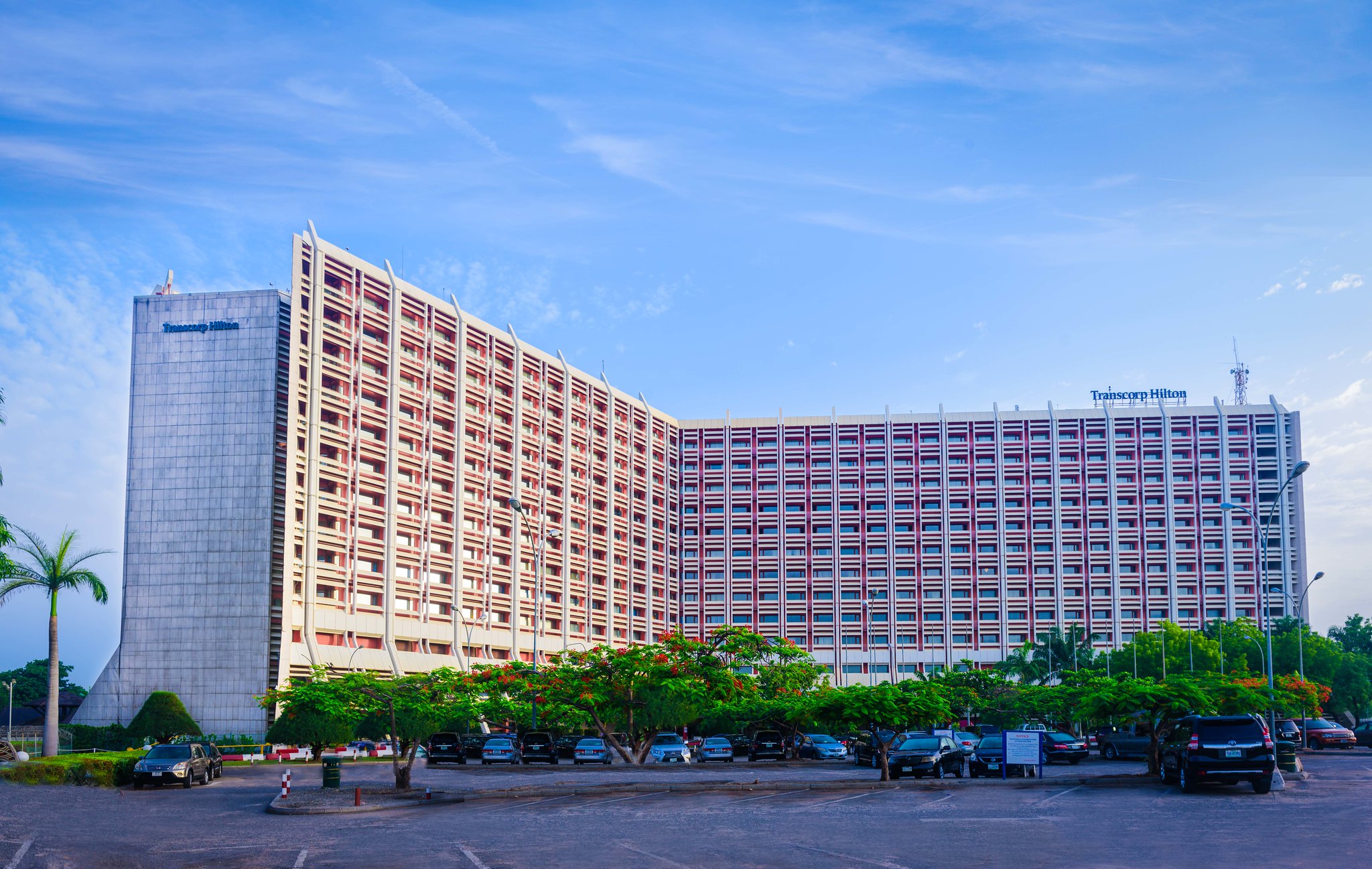
Heirs Holdings’ strategy of creating the leading integrated energy business in Africa is executed through a series of strategic portfolio holdings. Transcorp is one of the largest power producers in Nigeria, with 2,000 MW of installed capacity, through ownership of Transcorp Power Plant and the recent acquisition of Afam Power Plc and Afam Three Fast Power Limited. Transcorp closed the US$300 million Afam acquisitions in November 2020. Transcorp supplies electricity to the Republic of Benin, as part of an emphasis on promoting regional integration and delivering robust power supply to catalyse development in Africa. Transcorp also operates OPL281, under a production sharing contract with the Nigerian National Petroleum Corporation (“NNPC”). Similarly, Heirs Holdings’ subsidiary, Tenoil is the operator of OPL 2008, under a production sharing contract with NNPC. Tenoil also owns the Ata Marginal Field, which will commence production in Q2, 2021, with 3,500 barrels of oil per day.
Chairman of Heirs Holdings, Tony Elumelu stated: “We have a very clear vision: creating Africa’s first integrated energy multinational, a global quality business, uniquely focused on Africa and Africa’s energy needs. The acquisition of such a high-quality asset, with significant potential for further growth, is a strong statement of our confidence in Nigeria, the Nigerian oil and gas sector and a tribute to the extremely high-quality management team that we have assembled. As a Nigerian, and more particularly an indigene of the Niger Delta region, I understand well our responsibilities that come with stewardship of the asset, our engagement with communities and the strategic importance of the oil and gas sector in Nigeria. We see significant benefits from integrating our production, with our ability to power Nigeria, through Transcorp, and deliver value across the energy value chain.”
Speaking further, he said “I would like to thank Shell, Total and ENI, for the professionalism of the process, the Federal Government of Nigeria, the Ministry of Petroleum Resources, and the NNPC for the confidence they have placed in us.”
Speaking on the investment, the President/GCEO of Transcorp, Owen Omogiafo, said “This deal further demonstrates Transcorp’s integrated energy strategy and our determination to power Africa.”
Heirs Holdings was advised by Standard Chartered Plc, as Global Coordinator, and United Capital Plc, with a syndicate of lending institutions including Afreximbank, ABSA, Africa Finance Corporation, Union Bank of Nigeria, Hybrid Capital, and global asset management firm Amundi. The deal also involves Schlumberger as a technical partner, as well as the trading arm of Shell as an offtaker.
Heirs Holdings has created one of Africa’s largest, indigenous owned, oil and gas businesses, headquartered in Lagos, Nigeria and led by a board and management team with significant regional and global experience in production, exploration, and value creation in the resources sector. The HH Group is committed to the highest standards of safety, health, and community relations, together with best practice in governance and accountability.
Ecobank Nigeria says it is partnering Ultima Studios on the Lions’ Den TV reality show to further its aspiration to support entrepreneurs who have good business ideas but need to raise funds for advancement. Managing Director, Ecobank Nigeria, Patrick Akinwuntan who stated this in Lagos reiterated Ecobank’s commitment to be the foremost financial institution in the country providing thought leadership within the Small and Medium Enterprises (SMEs) space and also supporting them with access to financial products and services to succeed. Ecobank is the Lead Sponsor of the TV reality show hitting TV screens in 2021.
Lions’ Den which is being packaged and produced in Nigeria by Ultima Limited, a leading reality television programmes producer in West Africa, is a spinoff of the popular ‘Dragons Den’ and ‘Shark Tank’ in the UK and US respectively. The TV show brings together budding entrepreneurs and innovators with seasoned investors and business leaders to create an avenue where compelling best ideas are supported and funded.
Mr. Akinwuntan said he is optimistic that the show would attract the target group including established SMEs seeking seed or expansion capital , aspiring entrepreneurs and young graduates with bright business ideas. He reiterated that the TV show has a proven track record of appealing to both male and female audiences across the globe.
“ SMEs and entrepreneurs in the country are looking for a viable partner that will help them build sustainable businesses. Customers have become more discerning, they are not looking for any partner, but the right partner – one that is not just providing financial support but is investing in their growth; this is what Ecobank represents. We have been actively supporting SMEs because we recognise them as the engine of growth of any economy. This TV show will further create more entrepreneurs. We are pleased to partner with Ultima Limited who have a pedigree of producing world class programmes such as ‘Who Wants To Be A Millionaire?’ and ‘Project Fame West Africa’. We believe the target group will embrace the programme and at the end of the day, we will achieve our objectives of supporting small businesses and helping aspiring entrepreneurs in the country realize their dreams.”
Recently, the Chief Executive Officer, Ultima Studios, Femi Ayeni said he has reached an agreement with UK-based Sony Pictures Television to produce the Nigerian version of the globally acclaimed business reality television show, ‘Lions’ Den’. He said the show, the first of its kind in Nigeria, is a variation of the original show that was first aired in Japan and has now been produced in over 30 countries. The show targets entrepreneurs who have good business ideas but need to raise funds to advance their business. According to him, Ultima’s choice of Lions’ Den is a celebration of the entrepreneurial spirit of Nigerians, adding that the programme will not only provide exciting viewing for viewers at home, but also provide an opportunity for serious entrepreneurs to attract much-needed investments.
Lions’ Den is the world’s number one business reality show – adapted in over 30 countries worldwide. In summary, five investors listen to pitches from budding and innovative entrepreneurs who present their innovative ideas/ business plans in return for capital. Entrepreneurs with successful pitches on the show do not only obtain investments but also acquire mentors and partners for the lifespan of their business. The show, which appeals to adults 18 -54 years, generates consumer engagement opportunities as well as long term business relationships with participants, both on and off the show. It provides a platform for business education, directly and indirectly expanding on several business concepts such as investments, demand and supply, branding, business accounting and entrepreneurship. Entrepreneurs on the show and those viewing the show will acquire insightful business knowledge, through the questions, comments and suggestions offered by the Lions over the course of the show.
BUA Group has donated three ambulances and 100,000 facemasks to the Yobe State Government.
As COVID-19 cases continue to rise across Nigeria, BUA has donated three ambulances and 100,000 facemasks to the Yobe State Government as part of its social support and humanitarian commitment to combat the COVID-19 pandemic in the country.
Presenting the donations on behalf of the Chairman of BUA Group, Abdul Samad Rabiu at the Government House, Damaturu, Aliyu Idi Hong, Director of Government Relations, BUA Group commended Governor Mai Mala Buni of Yobe State for his tireless efforts in curbing the COVID-19 pandemic in the state.
According to Hong, “So far, the Chairman of BUA Group, Abdul Samad Rabiu has given more than 8 billion Naira worth of support to towards the fight against COVID-19 in Nigeria.”
“With the second wave spreading across Nigeria, we are expanding the scope of our intervention to various states and will continue to support initiatives aimed at helping to curb the spread of the virus in Nigeria,” Hong added.
Reacting, Governor Buni thanked Abdul Samad Rabiu, Chairman/Founder BUA Group, for his humanitarian gesture to the nation especially to Yobe State noting that the “donation is coming at the right time because of the second wave of the pandemic”.
The governor reminded the Yobe people to adhere strictly to the covid-19 preventive measures by wearing facemasks, keeping social distancing and washing their hands.
First Bank of Nigeria Limited, Nigeria’s leading financial inclusion services provider has launched the Virtual Payment card, a Naira denominated debit card and digital representation of the plastic debit card. The card is designed to be linked to either a customer’s operative account or wallet account.
The FirstBank Virtual Payment Card is a suitable alternative to the use of cash and cheques, with its wide-range features which include the ability of cardholders to protect his/her card using the block and unblock capabilities; PIN Reset; Change PIN as well as view statement at one’s convenience. It also enables diaspora customers to spend from his/her FirstBank account within the spend limit advised by the bank without the need for a physical card.
The FirstBank Virtual Payment Card is a safe, convenient, and easy way of making e-commerce payments amongst other functionalities.
The Virtual Payment Card can be created via the Bank’s leading digital channels; FirstMobile or Firstmonie Wallet applications. Customers can download the card, activate the card and consummate transactions all at once from the comfort of their homes/offices. No branch visit is required. Customers are advised to update their mobile application to the latest version, then select Card Services on the FirstMobile App and My Virtual Card application to create a Virtual Card at the cost of N215 (VAT Inclusive).
Speaking on the launch, Mr. Gbenga Shobo, Deputy Managing Director, First Bank of Nigeria Limited said ‘the launch of our Virtual Payment Card is yet another secure and seamless way we promote electronic banking, whilst enabling customers to carry-out their transactions on the web”
“The Virtual Payment Card is also designed to guard against the spread of the COVID-19 as it does not require physical interaction between the customer and FirstBank Branches. We enjoin our customers to download the application and stay ahead in modern banking,” he concluded.
Similarly, FirstBank recently launched the FAST Track ATM, the next generation ATM and first of its kind in Africa, designed to promote financial activities on the ATM without any form of physical interaction with the machine.
For more information on the Virtual Payment Card, kindly click here for the Frequently Asked Questions (FAQs).
Regardless of how Ugandans decide to vote in today’s presidential elections, the incumbent Yoweri Museveni will most likely be declared the winner. Museveni has ruled the country for five consecutive terms. He has historically been able to manipulate elections in his favour, because he controls Uganda’s military, judiciary, and Electoral Commission with an iron fist.
Throughout this electoral campaign, however, the long-standing Ugandan president has been upstaged by a formidable young challenger: popular musician-turned-parliamentarian Robert Kyagulanyi, aka Bobi Wine. Since being elected as a Member of Parliament in 2017, the 38-year-old leader of the National Unity Platform has become the new face of Uganda’s opposition.
There are four things worth knowing about Bobi Wine and Uganda’s politics.
Building a movement, defying expectations
Bobi Wine has repeatedly been underestimated by government supporters and critics since he first ran for parliament. He was forced to run as an independent after the two major opposition parties, the Forum for Democratic Change and the Democratic Party, turned him away.
He nevertheless easily won the by-election in the Kyandondo East constituency within Kampala with 78% of the vote. Since then, he has proved himself to be a skilled politician who has successfully built a strong political movement – from scratch.
Within his first two years in office, he forged a reputation as a principled and fearless opponent of Museveni’s policies. He was a leading voice against the president’s ultimately successful effort to remove presidential age limits from the constitution. He also led protests against the government’s proposed tax on social media in July 2018.
Over the course of that same year, he endorsed opposition candidates who went on to win four consecutive parliamentary by-elections.
By 2018, he had created a political pressure group called People Power, Our Power. When the government blocked its registration as a formal political party, Bobi Wine outmanoeuvred the Electoral Commission by aligning himself with a smaller, pre-existing one, which he re-christened as the National Unity Platform. Almost immediately more than 20 MPs left more established opposition parties to join his party.
A target of unprecedented state repression
Bobi Wine has been a regular target of state repression.
The Museveni regime responded to his early successes by repeatedly blocking him from holding concerts and banning the public from wearing People Power’s trademark red berets.
Since being elected, Bobi Wine has been arrested countless times. He has never been convicted on any of the charges. Some of his movement’s members and supporters have been killed, sometimes in suspicious circumstances.
Many have been arrested. Perhaps most notoriously, in August 2018, as he campaigned for a fellow independent candidate in a by-election in Arua in northwestern Uganda, Bobi Wine and at least 35 of his political associates were arrested following dubious reports that Museveni’s motorcade had been stoned. That same night the opposition leader’s driver, Yasin Kawuma, was murdered with a bullet that Bobi Wine believes was intended for him.
In the aftermath of these arrests, the Kyadondo East MP was charged with treason and possession of illegal firearms. Over his next ten days in custody, he was beaten so brutally by government security forces that he could not stand, sit or walk. He eventually sought treatment for his injuries in the US.
International outrage at this incident has not stopped the Museveni regime from escalating its tactics of repression during this election cycle.
The arrests have continued unabated throughout the current campaign. In addition, campaign rallies have been restricted and the government has met opposition supporters with deadly force on multiple occasions. Most tragically, following Bobi Wine’s arrest in mid-November, nationwide protests erupted during which state security forces killed at least 54 people.
In response to these abuses, in early January, Bobi Wine and two other co-claimants filed a 47-page complaint to the International Criminal Court against Museveni and nine of his regime’s security officials, accusing them of gross human rights violations dating back to 2018.
Generational dimension
Uganda’s changing demographics have a great deal to do with Bobi Wine’s electoral appeal. The East African country of 46.5 million people has one of the world’s youngest populations, with a median age of 16.7. Just over one in five Ugandans are between the ages of 15 and 24 and 77% of the country’s population is under the age of 30.
Although these young people have benefited from reforms to public education introduced by the Museveni regime, they see little hope for the future. By some estimates, youth unemployment in Uganda is as high as 70%. Frustrated young people can, therefore, easily identify with Bobi Wine, who grew up in the Kampala ghetto of Kamwokya. Like him, they have only known life under Museveni. He was not even four when Museveni first came to power in 1986.
Bobi Wine has skilfully appealed to this demographic. He frames his political movement in generational terms: the “Facebook generation”, which he represents against the “entrenched interests of the ‘Facelift generation’” of the Museveni regime. He has been able to speak to – and articulate – the deep sense of anger and grievance that young Ugandans feel towards the Museveni regime. In so doing, Uganda’s “Ghetto President” has come to be the face and voice of young people’s collective desire for generational political change.
Populism
In the final weeks of the campaign, Museveni derided Bobi Wine as a populist politician. While this adjective was intended to dismiss his young adversary, there is some truth to this label. In my research, I argue that Bobi Wine’s inclusionary brand of populism has also been a key to his political success.
His use of populist rhetoric has effectively forged a new collective sense of identity among his mostly youthful supporters around the nodal point of “the people” and in antagonistic opposition to the country’s political elite .
But Bobi Wine’s brand of populism is novel because his conception of “the people” is defined not in ethno-nationalist terms (as with right-wing politicians in the US or Western Europe). Rather it’s defined largely in generational ones. This has helped him to build a burgeoning political coalition across ethno-regional lines.
If Bobi Wine’s brand of generational populism proves successful, its repercussions could be felt across Africa. It could serve as a model for opposition politicians who are operating in countries with similar demographic characteristics and facing many of the same political obstacles.
Rep. Liz Cheney, the third-ranking House Republican, said Tuesday she will vote to impeach President Donald Trump, as at least four GOP lawmakers will move to charge the president from their own party with high crimes and misdemeanors.
She is the highest-ranking Republican to call for the president’s impeachment in the wake of last Wednesday’s deadly Capitol Hill riot, which Trump helped incite with lies and incendiary rhetoric.
Rep. John Katko, R-N.Y., earlier said he would support impeachment after the president stirred up a mob that attacked the Capitol while Congress counted President-elect Joe Biden’s presidential win. Reps. Adam Kinzinger, R-Ill., Fred Upton, R-Mich., and Jaime Herrera Beutler, R-Wash., later joined Cheney and Katko. The riot left five people, including a Capitol police officer, dead.
In a statement, Cheney said Trump “summoned this mob, assembled the mob and lit the flame of this attack.”
“Everything that followed was his doing. None of this would have happened without the President,” the Republican conference chair said.
“The President could have immediately and forcefully intervened to stop the violence. He did not. There has never been a greater betrayal by a President of the United States of his office and his oath to the Constitution.”
Vice President Mike Pence said Tuesday evening that he will not try to remove Trump from office by invoking the 25th Amendment.
“I do not believe that such a course of action is in the best interest of our Nation or consistent with our Constitution,” Pence wrote in a letter to House Speaker Nancy Pelosi, D-Calif.
Pence did not specifically mention the impeachment push. However, he did urge Congress “to avoid actions that would further divide and inflame the passions of the moment” as “we prepare to inaugurate President-elect Joe Biden as the next President of the United States.”
The House plans to vote Wednesday on whether to charge Trump with high crimes and misdemeanors. Democrats have said they have enough votes to impeach the president for an unprecedented second time.
In a statement Tuesday evening, Pelosi named nine impeachment managers for the impending trial. Rep. Jamie Raskin, D-Md., will serve as the lead manager. He will be joined by Rep. David Cicilline, D-R.I., Rep. Ted Lieu, D-Calif., Rep. Diana DeGette, D-Colo., Rep. Joaquin Castro, D-Texas, Rep. Eric Swalwell, D-Calif., Stacey Plaskett, the Democratic delegate for the U.S. Virgin Islands, Rep. Joe Neguse, D-Colo., and Rep. Madeleine Dean, D-Pa.
Once the House impeaches Trump, the Senate will decide whether to convict him. The chamber may not have time to vote to remove him from office before Biden takes office a week from Wednesday.
Even so, conviction in the Senate would prevent Trump from holding elective office in the future and he could lose perks given to former presidents.
The House Republicans revealed their stances as The New York Times reported that Senate Majority Leader Mitch McConnell, R-Ky., has told associates he thinks Trump committed impeachable acts. The newspaper did not detail whether McConnell would vote to convict the president if the House sends articles of impeachment to the Senate or whether he would urge Republicans to vote the same way.
More Republicans could join Cheney, Katko and Kinzinger in backing the effort. No House Republicans voted to impeach Trump in 2019 for abuse of power and obstruction of Congress.
“Good for her for honoring her oath of office,” Pelosi said in response to Cheney’s support for impeachment. “Would that more Republicans would honor their oaths of office.”
The move by Cheney, a Wyoming Republican, breaks from House Minority Leader Kevin McCarthy, who has opposed impeaching Trump. He and Minority Whip Steve Scalise, R-La., objected to counting Biden’s certified election victories in Arizona and Pennsylvania after the attack on the Capitol.
Cheney is the daughter of former vice president and Defense Secretary Dick Cheney. He joined the nine other living Pentagon chiefs earlier this month in warning against involving the military in disputes over election results. The Washington Post op-ed came three days before the Capitol attack.
Trump earlier said Democrats’ push to impeach him was dangerous and could spark more violence. Some of his Republican allies have argued the effort would hinder attempts to reduce tensions in the country.
Impeachment supporters have said Congress should not move on until they hold Trump accountable for his supporters’ attempt to disrupt the peaceful transfer of power.
The impeachment article Democratic leaders have appeared to back, titled “Incitement of Insurrection,” accuses Trump of committing high crimes and misdemeanors by encouraging an attack on a co-equal branch of government. It says the president, by lying to his supporters about the election results for two months and then encouraging them to fight the outcome shortly before the invasion of the Capitol, helped to spur the riot.
With days to go before Trump leaves office, the House rushed through the traditional process to bring impeachment to a swift vote in the full chamber. In a report supporting the impeachment measure, House Judiciary Committee staff said Tuesday that Trump “repeatedly sought to overturn the results of the election” and “continued a parallel course of conduct that foreseeably resulted in the imminent lawless actions of his supporters.”
The report goes on to say: “President Trump committed a high Crime and Misdemeanor against the Nation by inciting an insurrection at the Capitol in an attempt to overturn the results of the 2020 Presidential Election. The facts establish that he is unfit to remain in office a single day longer and warrant the immediate impeachment of President Trump.”